
Avoiding Common Cooling Mistakes in Jensen Beach, FL Homes

Nis Air • March 20, 2026

Avoiding Common Cooling Mistakes in Jensen Beach, FL Homes

Cooling mistakes in Jensen Beach, FL such as neglecting air filters, skipping maintenance, and using incorrect thermostat settings waste energy, increase bills, and shorten your AC system's lifespan unnecessarily.

What Happens When You Forget to Change Filters?

Dirty filters restrict airflow, forcing your AC to work harder, which raises energy costs and can cause the system to overheat or freeze up.

Air filters trap dust, pollen, and debris to protect both your health and your equipment. When they become clogged, airflow decreases and your system struggles to pull enough air across the evaporator coil. This strain increases electricity consumption and can lead to compressor failure, one of the most expensive repairs.

Frozen coils result when restricted airflow prevents proper heat exchange, causing condensation to ice over. Changing filters every one to three months, depending on usage and indoor air quality, is one of the simplest ways to maintain efficiency and prevent breakdowns.

Can Thermostat Settings Really Increase Your Bills?

Yes, setting your thermostat too low, constantly adjusting it, or using manual mode instead of programmable settings wastes significant energy every month.

Many homeowners set their thermostat to 68 or 70 degrees, thinking it will cool the house faster. In reality, your AC cools at the same rate regardless of the setting; lower temps just make it run longer. Each degree below 78 can increase cooling costs by several percentage points.

Constantly changing the temperature throughout the day forces the system to cycle on and off more frequently, which is less efficient than maintaining a steady setting. Programmable or smart thermostats adjust temperatures automatically based on your schedule, reducing runtime when you're away and ensuring comfort when you return.

For expert advice on optimizing your system, explore AC maintenance services in Jensen Beach, FL to fine-tune settings and performance.

How Does Ignoring Maintenance Lead to Bigger Problems?

Skipped maintenance allows small issues like loose wiring, low refrigerant, or dirty coils to develop into major failures that require costly emergency repairs.

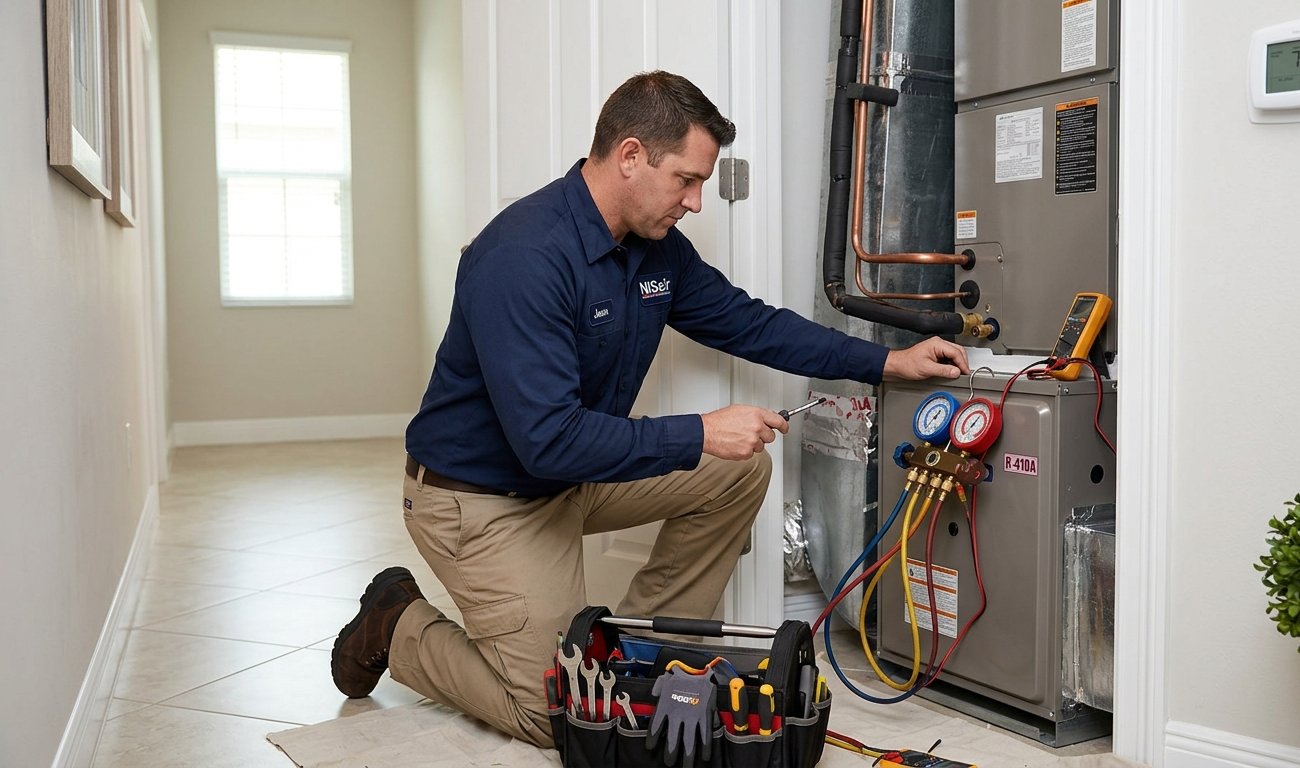
Routine maintenance visits catch worn parts before they break, clean components that lose efficiency over time, and verify that your system is operating within safe parameters. Without these checks, refrigerant leaks go undetected, electrical connections corrode, and condensate drains clog, leading to water damage or mold growth.

A well-maintained system lasts years longer and uses less energy than one that receives no attention. The cost of annual maintenance is far lower than emergency repairs or premature replacement.

How Do Jensen Beach's Weather Patterns Affect Cooling Strategies?

Jensen Beach experiences intense summer heat, high humidity, and frequent afternoon storms, which require systems to run almost continuously and handle heavy moisture loads.

Afternoon thunderstorms raise humidity levels quickly, demanding strong dehumidification performance from your AC. Salt air from the nearby coast accelerates corrosion on outdoor units, making regular cleaning and inspection even more important. Homes near the water often face higher cooling loads due to sun exposure and limited shade.

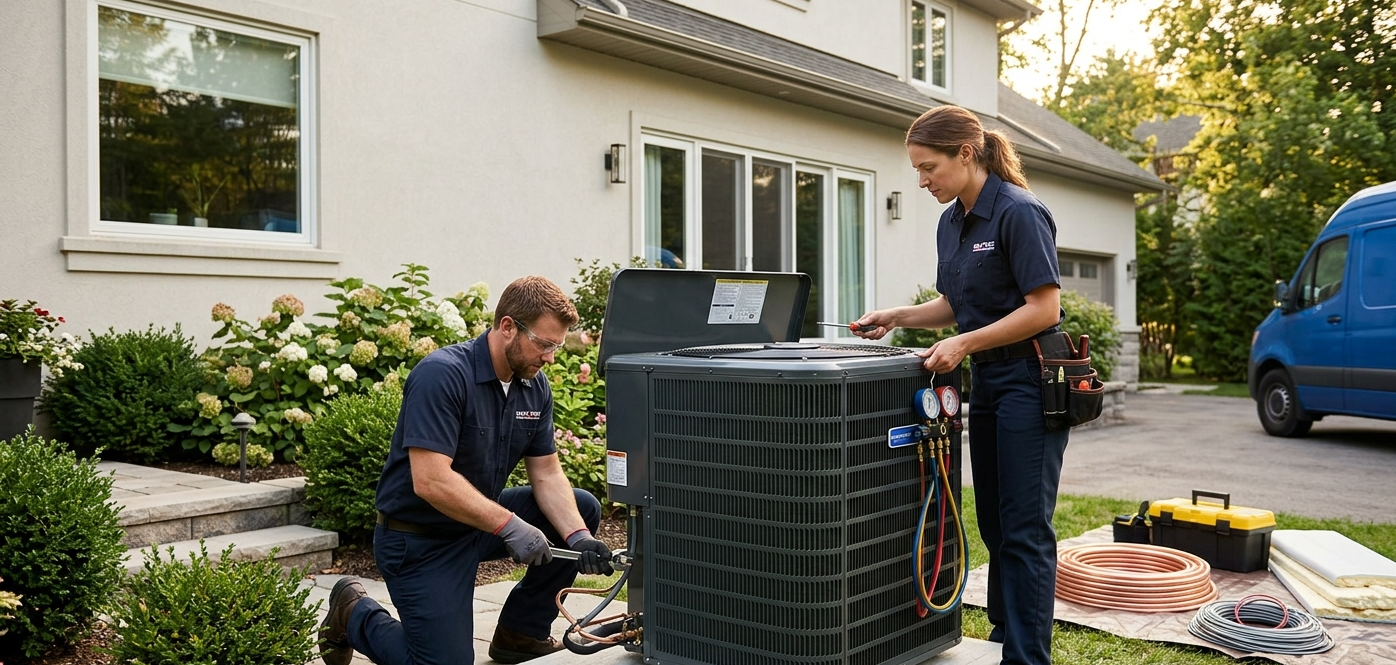
Local experts recommend weatherproofing outdoor units, using surge protectors to guard against storm-related power spikes, and scheduling maintenance before peak summer heat arrives. These steps help systems handle the region's unique demands without excessive wear.

When repairs are needed, prompt AC repair services in Jensen Beach, FL restore cooling quickly and prevent minor issues from escalating.

Avoiding common mistakes keeps your cooling system efficient, reliable, and ready to handle Florida's demanding climate year after year. Nis Air helps homeowners maintain peak performance through proactive service and expert guidance.

Discover how proper care extends your system's life by calling Nis Air at 772-758-2100 for maintenance or repair services tailored to your needs.

Recent Posts

By Corey Creekmore March 21, 2026
Is your AC drain line a ticking time bomb? Learn how a simple $0.50 pipe can cause $10,000 in water damage and how to fix it fast. Read the Nisair guide now.
By Corey Creekmore March 20, 2026
The Fundamental Mistake: Temperature ≠ Comfort We are conditioned to think of comfort linearly. 75°F is warm; 70°F is cool. If you are warm, make the number lower. This logic works perfectly in Arizona, where "Hot & Dry" dominates. In South Florida, however, your air conditioner has two entirely separate jobs, but it can only perform one of them at a time with maximum efficiency. Job 1 (Sensible Cooling): Lowers the actual air temperature (what your thermostat measures). Job 2 (Latent Cooling): Removes the humidity from the air. When it’s a standard Florida afternoon, your home isn’t just hot. It’s "heavy." The air is thick with moisture. A high-efficiency A/C system must prioritize removing that moisture before it can efficiently lower the temperature. The Science of Clamminess Why does humidity make us feel hot even when the temperature is low? It’s all about the dew point. When the humidity in your home is high (above 60%), the moisture in the air has nowhere to go. Because of this saturation, the natural mechanism your body uses to cool down—evaporation from your skin (sweat)—cannot function. You are stuck with a film of sweat that cannot evaporate. This creates that distinct "clammy" or "sticky" feeling. You feel hot not because of the air temperature, but because your body cannot reject its own heat. The Problem: Your A/C is Doing "The Florida Hustle" When you set your thermostat to 70°F on a humid day, you are telling your A/C system to work against its own physics. To reach that extremely low number, the compressor runs at maximum capacity. The system has to work so hard to make the air that cold that it has to run in short, intense bursts (especially with older single-speed systems). This is called Short-Cycling . This is the core of the problem. Short-Cycling: The Comfort Assassin Here is what happens inside your system during a short-cycle: The thermostat demands 70°F. The A/C blasts the air down from 76°F to 72°F quickly. The air coming out of the vents is freezing (maybe 55°F). But the entire run time was only 7 minutes. The problem? It takes about 10–15 minutes of continuous run time for an A/C system’s coils to get cold enough to properly remove moisture (Job 2). During that 7-minute burst, your A/C reached the target temperature (Job 1) and shut off. But it removed almost ZERO humidity. The result is "The Meat Locker" effect shown on our matrix: Your air is cold, but the humidity is still 68%. You are clammy, uncomfortable, and you are wasting hundreds of dollars a month running your system in its least efficient state. The Solution: Shift Your Thinking (and Your Thermostat) To fix a "Hot & Dry" home in Arizona, you lower the thermostat. To fix a "Hot & Wet" home in Florida, you might actually need to raise the temperature. The 74-Degree Oasis This is the counter-intuitive "life hack" that South Floridians need to embrace. If you can lower your humidity from 70% down to 45%, you can set your thermostat significantly higher and still feel cooler and more comfortable than you did at 70°F. A dry home set at 75°F will feel cooler and more pleasant to your body than a clammy, humid home set at 71°F . How to Fix Your Sticky Home: A 3-Step Action Plan You do not necessarily need a new A/C to solve this problem. Here is how to fight the Humidity Ghost: 1. The "AUTO" Rule (The #1 Mistake Homeowners Make) Check your thermostat right now. Is the Fan setting on ON or AUTO ? If it is on "ON," change it to "AUTO" immediately. This single action is responsible for 80% of humidity issues we diagnose. When set to "ON": The fan runs constantly, even when the A/C compressor is off. What happens: The A/C runs its cycle, removing humidity from the air and trapping it on the cold evaporator coils. The cycle ends, and the compressor shuts off. BUT... the fan keeps blowing. The Problem: That constant fan air blows directly across the newly damp coils. It re-evaporates all the moisture you just painstakingly collected and blows it right back into your living room. You are effectively using your A/C as a humidifier. 2. The Annual "Health Check" (Maintenance is Key) A dirty or neglected system cannot handle Florida's humidity demands. A Dirty Air Filter: Restricts airflow. This makes the coils get too cold, potentially freezing them, which prevents them from absorbing moisture properly. A Clogged Drain Line: This is critical. The A/C collects moisture, and it needs to flow out of your house. A clogged line keeps that moisture trapped inside the air handler, where it re-evaporates. Low Refrigerant: A system with low refrigerant (a leak) operates at a higher internal temperature. It cannot make the coils cold enough to achieve the dew point required for effective dehumidification. 3. Technology Upgrades for True "Oasis" Comfort If your basic system isn't cutting it, you may need a technical assist. Whole-Home Dehumidifier: This is the gold standard for Florida comfort. It connects to your existing ductwork and removes moisture independently of your A/C system. This allows your A/C to focus only on Job 1 (Temperature) while the dehumidifier handles Job 2 (Humidity). You get perfect comfort while setting your thermostat higher (saving money). Variable-Speed A/C Systems: Unlike older systems that are either 100% "ON" or "OFF," variable-speed systems can run at lower speeds (e.g., 40% capacity) for much longer periods. They run the "Florida Comfort Cycle" perfectly: running long enough to remove all humidity, creating a perfectly balanced home with lower energy use. Conclusion: Regain Control of Your Comfort South Florida life is defined by humidity. Your air conditioner shouldn't just fight that humidity—it should master it. Don't spend another summer in "The Meat Locker." Stop treating the symptoms (Temperature) and start treating the cause (Humidity). By following these steps and shifting your focus from the temperature reading to your comfort level, you can create a dry, healthy, and cool "Oasis" in your own home. At NisAir, we are specialists in coastal comfort. If your home still feels sticky, trust our Treasure Coast experts to diagnose your humidity issue and provide the solution that’s right for your home, your health, and your budget. The 70-Degree Sweat: Why Your Florida Home Feels Hot Even When the A/C is Blasting
By Corey Creekmore March 13, 2026
Is your South Florida energy bill skyrocketing? Discover 5 hidden reasons your AC is overworking and how to save money from Vero Beach to West Palm Beach.
By Corey Creekmore March 7, 2026
Learn how to protect your AC in just 2 minutes before a hurricane hits. This essential HVAC guide prevents expensive damage and total AC system failure.
heater repair
By Corey Creekmore February 26, 2026
Don't let minor heat pump issues become major problems! Learn why quick repairs are crucial for efficiency, comfort, and avoiding costly system damage today.
By Nis Air February 18, 2026
Air conditioner replacement in Vero Beach, FL involves load calculation, system selection, professional installation, and testing to ensure optimal cooling performance.
heater repair
By Corey Creekmore February 18, 2026
Is your heater on the fritz? Discover why your heating system stopped working, from clogged filters to pilot light issues, and learn when to call an HVAC pro.
commercial hvac
By Corey Creekmore February 13, 2026
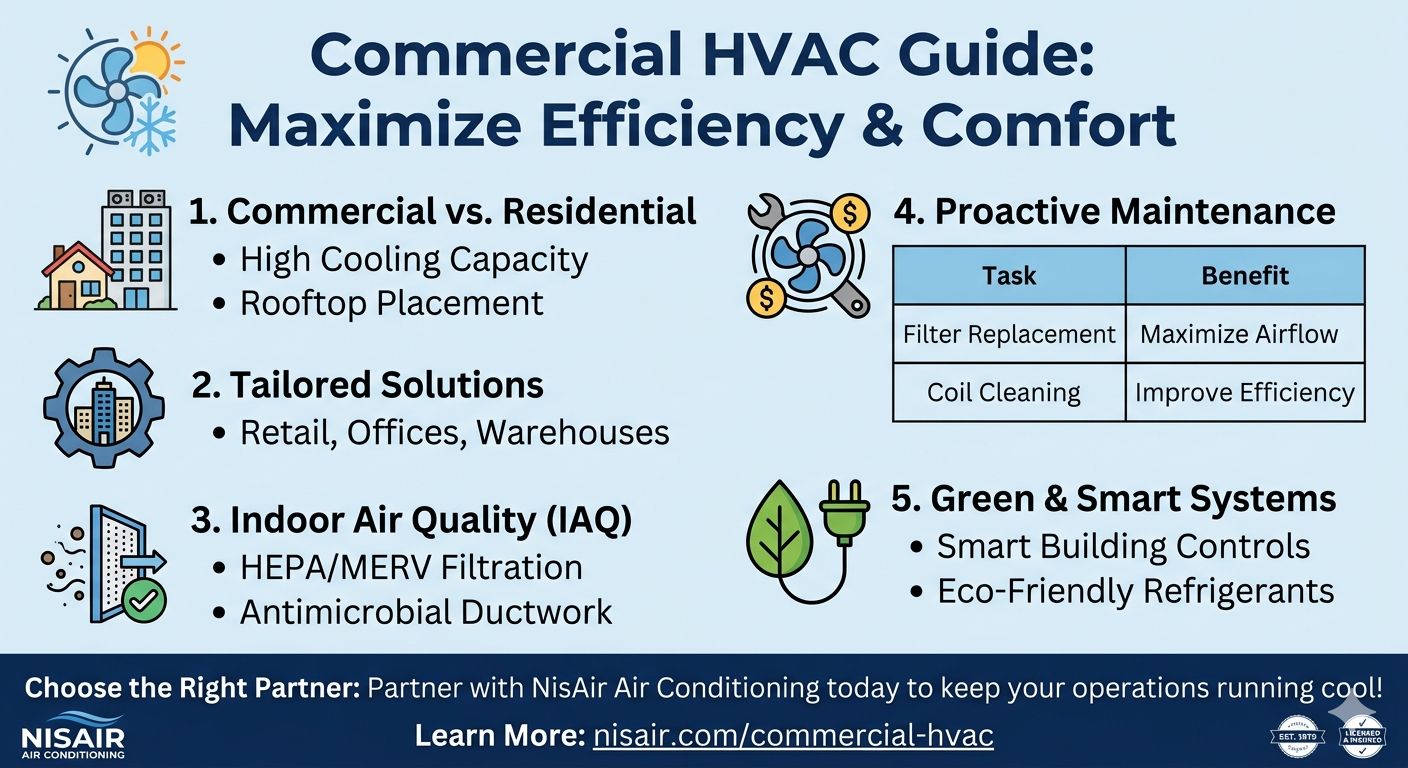
Efficiently heat & cool large commercial buildings with these 10 expert HVAC tips to boost comfort, reduce energy costs & improve long‑term system performance.
bad smell
By Corey Creekmore February 7, 2026
Learn what bad smells from your AC or heater mean, from musty mold and burning odors to gas and chemical leaks, and when to call an HVAC professional.
By Corey Creekmore January 29, 2026
Discover how heat pumps work as efficient “heaters” in mild winters, cutting energy bills, boosting comfort, and providing reliable, heating for your home.
Show More