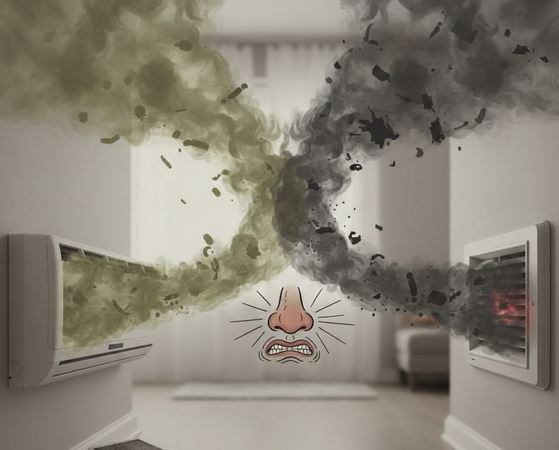
Bad smells from an AC or heater are usually a warning sign that something is dirty, damp, overheating, or leaking, and some odors can signal real safety hazards like electrical issues, gas leaks, or serious mold.
Why smells from AC or heat matter
When your HVAC system runs, it circulates air through your whole home, so any odor coming from it is being spread into every room. Many smells are tied to:
Moisture and biological growth (mold, mildew, bacteria).
Dust and dirt burning off components.
Electrical overheating or failing parts.
Refrigerant or fuel leaks (natural gas, oil).
Dead animals or debris trapped in ducts.
Some odors are mostly annoying and a sign you need cleaning or maintenance, while others mean “turn it off and call a pro immediately.”
Musty, moldy, or “dirty socks” smell
A musty, damp, or “dirty gym socks” odor is one of the most common complaints and almost always points to moisture problems.
What it usually means
Mold or mildew in the air handler, evaporator coil, drain pan, or ductwork.
Standing water or a clogged condensate drain line or pan.
Dirty air filter loaded with moisture and organic dust.
This smell can also be described as “dirty sock syndrome,” caused by bacteria and mold growing on cold evaporator coils after periods of inactivity.
Why it’s a problem
Mold spores and bacteria can aggravate asthma, allergies, sinus issues, and respiratory irritation.
It usually means drainage or humidity issues that will worsen air quality and may damage equipment over time.
What to do
Replace or clean filters and check for visible moisture in or around the unit.
Have a technician clean coils, drain pan, drain line, and ducts if needed, and check for leaks or persistent condensation.
Burning, smoky, or hot plastic smell
If your AC or heater smells like something is burning, like hot plastic, smoke, or gunpowder, take it seriously.
Two main scenarios
Dust burning off
When you first turn on the heat after months of being off, dust on the heating elements or heat exchanger burns away and can cause a brief, mild burnt-dust smell.
This should fade within an hour or so and not be smoky or plasticky.
Electrical or component overheating (much more serious)
Persistent burning plastic, electrical, or “hot motor” smell can indicate overheating fan motors, wiring, circuit boards, or other components.
You might also notice smoke, unusual noises, or the system tripping breakers.
What it means
Possible short circuits, failing motors, or overloaded components that can pose a fire risk.
What to do
If it’s clearly just light dust burning off at first startup and it fades quickly, monitor but you usually don’t need emergency service.
If the smell is strong, plastic-like, smoky, or keeps coming back, turn the system off and call an HVAC technician immediately.
Rotten egg or sulfur smell
A rotten egg, sulfur, or sewage-like smell coming from vents is a red-flag.
What it usually means
Natural gas leak associated with a gas furnace or gas line; utility companies add a sulfur-like odorant to gas so leaks can be detected.
Less commonly, a dead animal in ducts or near the air handler can decompose and produce a similar foul odor.
Why it’s critical
Gas leaks can lead to fire, explosions, or carbon monoxide buildup and are life-threatening.
What to do
If you suspect gas, shut off the system, leave the building, avoid switches or open flames, and contact your gas company or emergency services immediately.
If the gas company rules out a leak, have an HVAC pro check ducts and equipment for animals or other sources.
Chemical, sweet, or “exhaust” smell
Some AC or heat smells are described as sweet, chemical, like nail polish remover, or like car exhaust.
What it often means
Refrigerant leak in the AC or heat pump system, which can sometimes be perceived as a sweet, chemical, or slightly chloroform-like odor.
Exhaust-type smells when a gas furnace is not venting properly, allowing combustion gases to mix with indoor air.
Why it matters
Refrigerant leaks are a health concern and also damage the environment and your system, causing poor cooling and possible compressor failure.
Exhaust or combustion gases can contain carbon monoxide, which is odorless but may be present along with other fumes and is extremely dangerous.
What to do
Do not try to “top off” refrigerant yourself; leaks must be found and repaired by a licensed technician.
If you suspect combustion or exhaust issues, shut the system down and have venting, heat exchangers, and safety controls inspected.
Sewage, dead animal, or “garbage” smell
Some odors from vents are distinctly gross: dead animal, garbage, sewage, or strong musk.
Common causes
A small animal (mouse, bird, squirrel, etc.) died in ductwork, the attic near ducts, or inside the air handler.
Sewage backups or a dried-out drain trap near return vents allowing sewer gas to enter the system.
Extreme bacterial growth in standing water in drain pans or lines.
Why it’s an issue
Decomposing organic matter can carry bacteria and pathogens and makes indoor air extremely unpleasant.
What to do
Have ducts and the air handler inspected and cleaned, and remove any animals or heavily contaminated insulation.
Plumbers or HVAC techs may need to address drain traps or sewer gas intrusion if the smell resembles sewage.
Oily or fuel-like smell
If you use an oil furnace or have equipment using fuel oil, you may sometimes smell oil from vents or near the unit.
What it can mean
Minor oil residue from recent service that should quickly dissipate.
Oil burner problems, clogs, misfires, or poor combustion leading to strong oil or smoky odors.
Fuel leaks around lines, filters, or tank.
Because fuel smells can also be linked to carbon monoxide and fire risk, they should not be ignored.
When a smell is “normal” vs. dangerous
A few odors are expected briefly, but many require immediate action.
Often normal (short term):
Light burning-dust smell the first time you run heat after a long off period.
Slight musty whiff for a moment when AC first turns on, especially in humid climates, as air moves through cool, damp coils.
These should fade quickly; if they linger, it points to a bigger issue.
Urgent smells (shut off and call for help):
Strong rotten egg or sulfur smell (possible gas leak).
Persistent burning plastic, smoke, or electrical smell.
Strong chemical, sweet, or exhaust-like odor.
Overwhelming sewage or dead animal smell that doesn’t go away.
How to respond and prevent bad HVAC smells
Bad smells are both a diagnostic clue and a maintenance wake-up call.
Immediate steps when you notice an odor
Identify the type of smell (musty, burning, rotten eggs, chemical, sewage, animal) as accurately as you can.
If it points to gas, strong burning, or chemicals, shut the system off and leave the area if needed.
For milder musty smells, change filters, check for visible water, and see if the odor fades quickly; if not, schedule service.
Prevention tips
Replace filters regularly to reduce dust, moisture trapping, and organic buildup.
Have professional maintenance at least once a year for both cooling and heating to clean coils, inspect electrical components, and clear drains.
Keep condensate drain lines and pans clean and clear to prevent standing water and mold.
Seal and insulate ducts to deter pests and reduce moisture condensation.
Install and maintain carbon monoxide detectors if you have any fuel-burning appliances.
In short, a bad smell from your AC or heater is your system’s way of telling you something is wrong, ranging from simple cleaning needs to urgent safety hazards like gas leaks or electrical failures, and it should never be ignored.