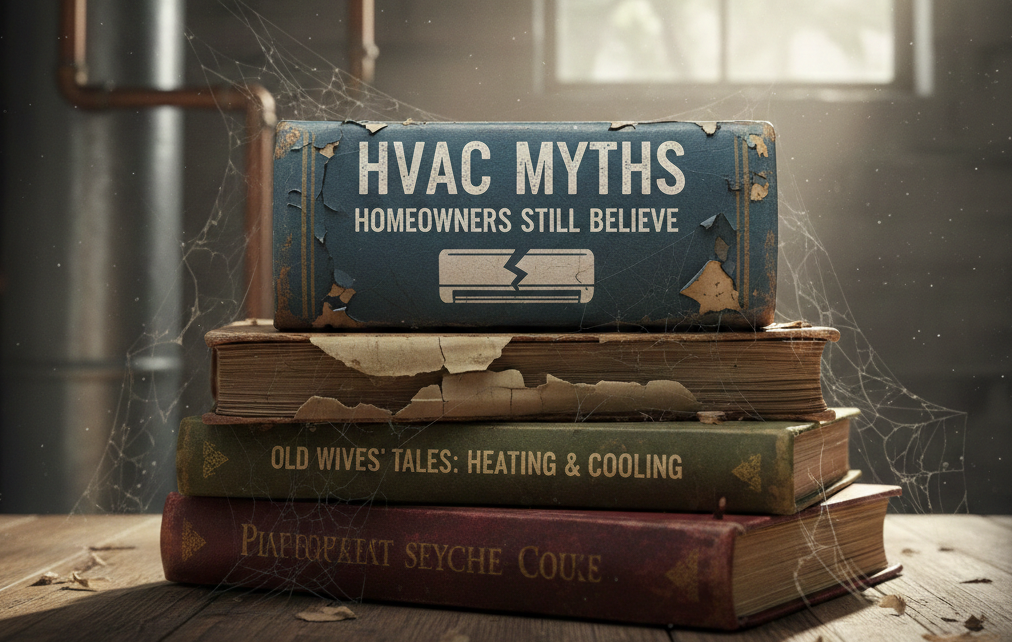
HVAC myths can quietly drain your wallet, shorten equipment life, and keep your home less comfortable than it should be. Many of these beliefs sound “logical,” but they don’t match how modern systems and today’s energy costs actually work.
Why HVAC myths stick around
Homeowners often inherit HVAC habits from previous owners, neighbors, or advice meant for older equipment and different climates. These rules of thumb linger for years, even when technology and building standards change. Marketing claims, social media tips, and one‑off experiences (like a single big bill or breakdown) can also reinforce bad assumptions about how heating and cooling really work.
Myth 1: “Bigger systems cool better”
A very common belief is that a larger air conditioner or furnace will cool or heat the home faster and therefore must be better. At first glance this makes sense: more power should mean better performance. In reality, over‑sizing an HVAC system causes frequent short cycling, where the unit turns on and off quickly without running long enough to properly dehumidify or distribute air. This leads to clammy rooms, uneven temperatures, and extra wear on components.
Right‑sized systems are designed to run steady, comfortable cycles that match the home’s actual heating and cooling load. When a professional performs a proper load calculation, they consider things like insulation, windows, sun exposure, and room layout instead of just square footage. A correctly sized system runs longer, gentler cycles, which improves comfort, reduces noise, and often extends the life of the equipment while keeping energy use stable over time.
Myth 2: “Turning the system off saves the most money”
Many homeowners still believe that turning the AC or heat completely off whenever they leave the house is the most efficient approach. The idea is to avoid “wasting” energy on an empty home. The problem is what happens when you come back: the temperature and, in many climates, the humidity may have drifted so far from your comfort range that the system has to run long and hard to catch up. That heavy recovery period can erase much of the savings you expected.
A better approach for most homes is using temperature setbacks rather than full shutdowns. With a programmable or smart thermostat, you can allow the temperature to drift a few degrees higher in summer or lower in winter when you are away, then gradually bring it back before you return. This keeps the house within a reasonable range, often uses less total energy over the day, and avoids large swings in humidity that can stress both your system and your indoor air quality.
Myth 3: “Closing vents in unused rooms saves energy”
Closing supply vents in rarely used rooms can feel like a logical way to “push” more air into the spaces you actually occupy. Forced‑air systems, however, are balanced for a specific amount of airflow through the ductwork. When vents are closed, static pressure in the ducts rises, which can strain the blower, increase duct leakage, and sometimes even lead to noisy whistling or rattling. In some cases, this added strain can reduce system efficiency and accelerate wear.
Instead of shutting vents, homeowners concerned with unused spaces should consider options that keep airflow healthy. These might include adjusting the system’s overall balancing during a professional visit, using zoning in homes designed for it, or improving insulation and air sealing so the entire house holds temperature more consistently. The goal is to maintain proper airflow while still managing comfort and costs in different areas.
Myth 4: “Ceiling fans actually cool the room”
Ceiling fans are popular and can make a room feel noticeably more comfortable, especially in warm weather. The myth is that fans lower the room temperature itself. In reality, fans do not cool the air; they move it. The moving air increases the evaporation of moisture on your skin and helps break up hot or cold pockets, so the body feels cooler at the same temperature. That means fans make people more comfortable, not the room.
Because fans don’t change the actual air temperature, they only help when someone is in the room to feel the effect. Leaving fans running in empty rooms wastes electricity without improving comfort. The most efficient way to use ceiling fans is to run them in occupied spaces and combine them with a slightly higher thermostat setting in summer. The perceived cooling from air movement allows you to raise the setpoint by a degree or two while maintaining comfort, which can reduce AC runtime.
Myth 5: “Maintenance is optional if everything seems fine”
It is easy to treat HVAC equipment like a refrigerator: set it and forget it as long as it turns on. Many homeowners assume that if their system is still blowing cold or warm air, there’s no need to invest in maintenance. The issue is that many of the problems that shorten system life or raise energy bills develop slowly and silently. Dirty coils, low refrigerant charge, clogged filters, and weak airflow often show up as very gradual changes in comfort or monthly costs rather than dramatic failures.
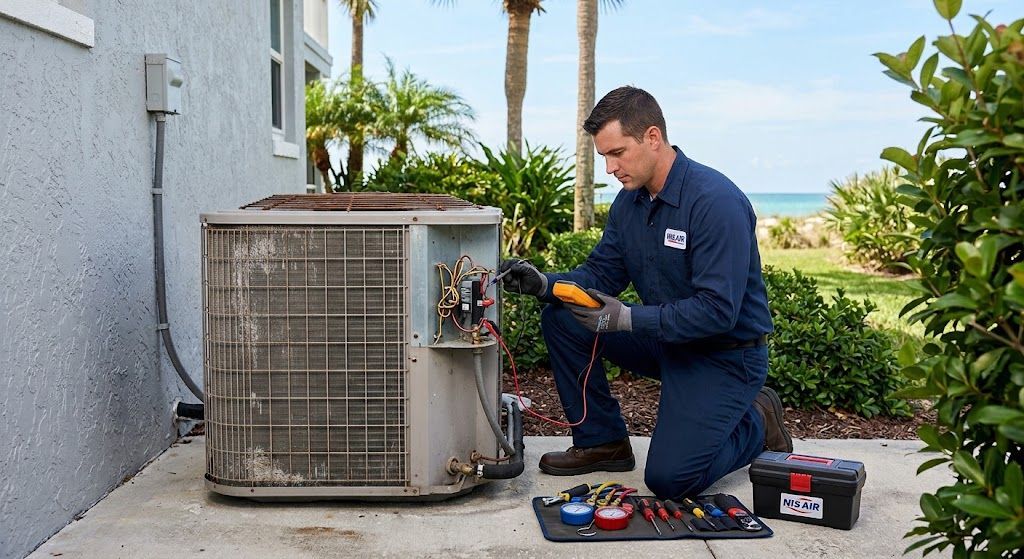
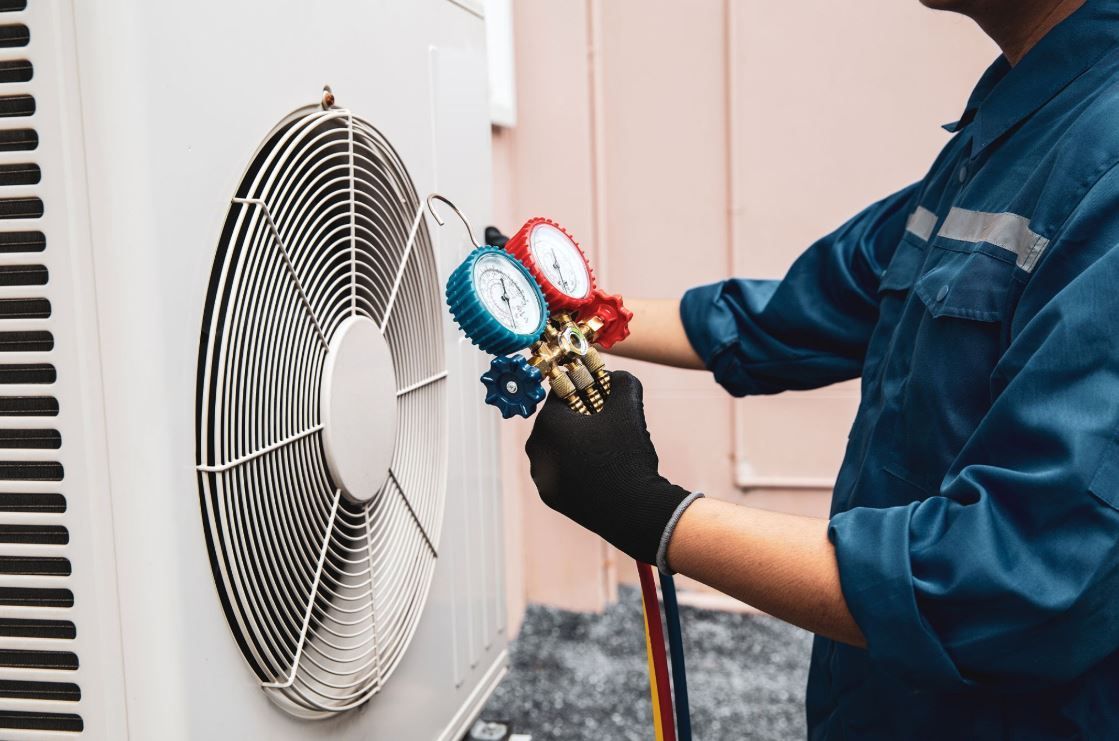
Routine maintenance helps catch small issues before they become expensive repairs. During a professional tune‑up, technicians inspect components, measure performance, clean critical parts, and verify safety controls. This kind of proactive care can improve efficiency, reduce the risk of mid‑season breakdowns, and often extend the system’s usable life. Skipping maintenance to save money typically trades a modest, predictable expense for a higher risk of large, unpredictable ones later.
Myth 6: “Air filters only protect the equipment”
Another widespread assumption is that filters exist mainly to keep dust out of the HVAC equipment. While protecting coils and motors is part of their job, filters play an important role in indoor air quality as well. The type and condition of the filter influences how much dust, pollen, and other airborne particles circulate through the living space. A neglected or poor‑quality filter can allow significant debris to build up in ducts and on components, while also recirculating irritants.
Choosing the right filter involves balancing filtration level with proper airflow. Very dense filters may catch more small particles but can also restrict airflow if the system wasn’t designed for them. Regularly changing or cleaning filters according to manufacturer guidance is one of the simplest ways for homeowners to protect both their HVAC system and their indoor air. In homes with allergies, pets, or high dust levels, a professional can recommend filter types or add‑on systems that improve IAQ without harming performance.
Myth 7: “Thermostat location doesn’t really matter”
Many homeowners treat the thermostat as just a convenient on/off switch, assuming it will work correctly wherever it is placed. In reality, the thermostat is the “brain” of the system, and its location greatly affects how accurately it senses the home’s typical conditions. When a thermostat is installed in direct sunlight, near a drafty door, over a supply register, or in a hallway that does not represent the main living areas, it may constantly misread the actual comfort level.
Poor placement can lead to short cycling, long run times, or rooms that never feel quite right. For example, a thermostat placed near a hot window might shut the AC off too late, over‑cooling other rooms, while one in a colder hallway might keep the heat running longer than necessary. Ensuring the thermostat sits on an interior wall, away from direct drafts and heat sources, and in a space that reflects average conditions helps the system maintain a more even, efficient comfort level.
Myth 8: “New systems don’t need attention for years”
After investing in a new HVAC system, it is common for homeowners to think they can ignore it for several years. New equipment can feel “set and forget,” especially compared to the older system it replaced. However, even brand‑new systems benefit from regular checkups. Components can still become dirty, small installation issues can surface over the first season, and settings may need fine‑tuning once the system operates under real‑world conditions.
Many manufacturers also require proof of regular maintenance to keep extended warranties valid. Skipping early maintenance visits can risk both performance and warranty coverage. Establishing a maintenance routine from the start ensures the system operates as designed, maintains its efficiency rating, and avoids the kind of silent wear that leads to premature repairs. It also helps homeowners build a relationship with a trusted HVAC provider instead of scrambling for help when something goes wrong.
Myth 9: “DIY fixes are just as good as professional service”
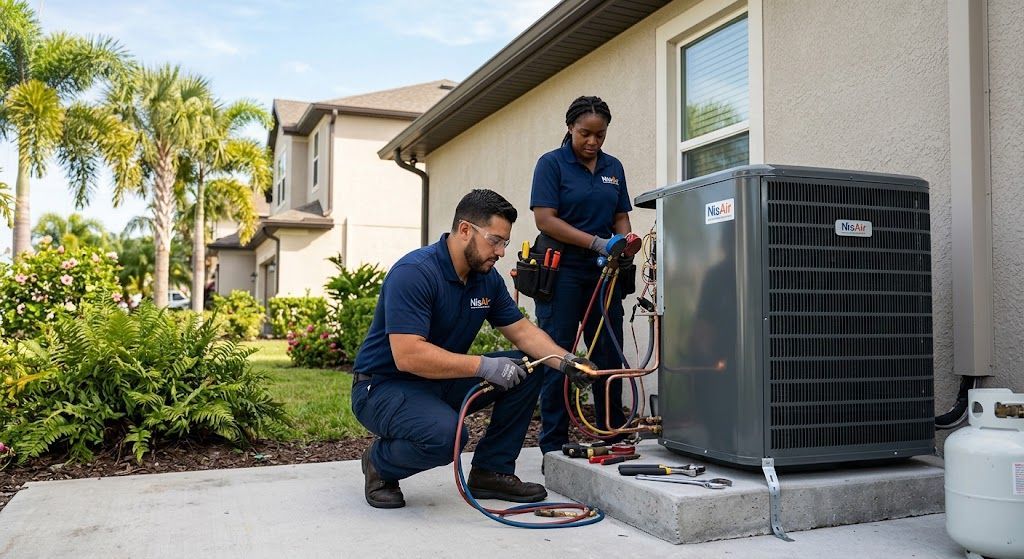
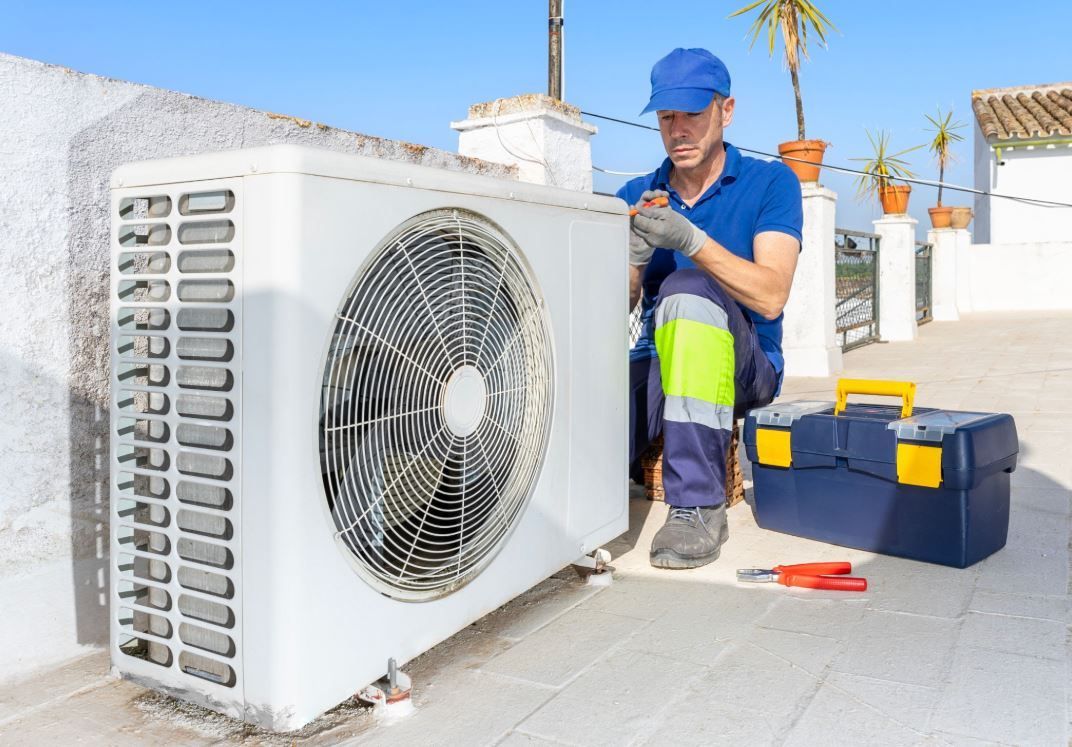
Online videos and forums can make HVAC repairs look simple, leading some homeowners to believe they can handle most problems themselves. While filter changes, basic thermostat adjustments, and keeping outdoor units clear of debris are reasonable DIY tasks, more involved work can be risky. Modern systems involve high‑voltage electricity, refrigerant handling, combustion safety, and complex controls that require training and proper tools.
Improper DIY repairs can void warranties, create safety hazards, or mask underlying issues instead of addressing them. For instance, adding refrigerant without finding the source of a leak can temporarily improve comfort while allowing a problem to worsen behind the scenes. A qualified technician not only fixes the immediate symptom but also looks for root causes and checks the system’s overall health. Homeowners are usually better off focusing on routine tasks and leaving diagnostics and repairs to professionals.
Myth 10: “All HVAC companies are basically the same”
Because many systems and brands look similar from the outside, it’s easy to assume every contractor will deliver roughly identical results. In practice, the quality of installation and service often matters more than the name on the equipment. Two identical units can perform very differently depending on how ducts are sized, how refrigerant charge is set, and how carefully airflow and controls are tuned. Long‑term reliability, comfort, and efficiency depend heavily on craftsmanship and follow‑through.
A reputable HVAC company takes time to understand the home, asks questions about comfort issues, explains options clearly, and stands behind the work. Transparent proposals, proper load calculations, documented maintenance, and clear communication demonstrate a focus on long‑term performance rather than quick, one‑time jobs. Choosing a contractor based solely on the lowest price can lead to shortcuts that cost far more in energy and repairs over the life of the system.
Questioning these common myths helps homeowners make smarter decisions about comfort, costs, and system longevity. Replacing assumptions with accurate information—and pairing that knowledge with regular maintenance and professional guidance—gives a home more consistent temperatures, better air quality, and fewer unwelcome surprises when utility bills arrive.