Living in South Florida means relying on your air conditioning system nearly 365 days a year. With intense summer temperatures, high ambient humidity levels, and salty coastal air, a properly designed cooling setup is essential for indoor comfort and air quality. Setting up a new climate system in the Sunshine State requires specific considerations—from strict Florida building code compliance to hurricane tie-down standards. Knowing how to prepare for and execute a professional HVAC installation ensures your home stays crisp, clean, and energy-efficient even through extreme heatwaves.
1. Navigating South Florida Climate Demands
Before selecting equipment, homeowners must understand how the local subtropical climate affects system performance. Unlike northern regions where heating is the main concern, South Florida cooling systems focus on moisture control, heat rejection, and salt-air protection.
Managing High Ambient Humidity
Standard air conditioners cool the air, but variable-speed systems excel at dehumidification. High humidity forces your compressor to work harder. Without proper moisture control during the HVAC installation process, indoor air can feel sticky even at lower thermostat setpoints, creating conditions that encourage mold growth.
Coastal Corrosion and Wind Protection
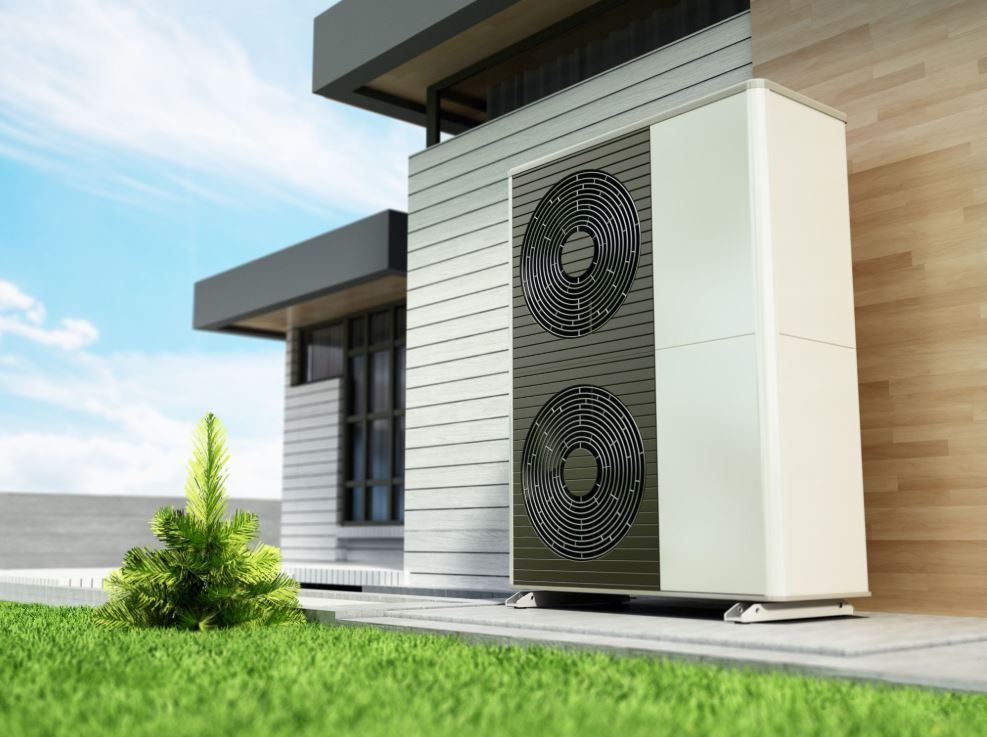
Properties within a few miles of the coast face salt air that can rapidly corrode copper coils and cabinet metal. Quality cooling systems require protective coatings, such as coastal coil treatments, to resist oxidation. Additionally, Florida building codes mandate that exterior condenser units sit on elevated pads secured with hurricane straps rated for local wind zones.
2. Proper System Sizing and Efficiency Standards
Replacing an aging unit with an identical size without evaluating the home is a common mistake. A successful setup begins with a detailed Manual J load calculation tailored to local home construction.
Key Load Factors for Regional Homes
- Window Orientation and Heat Gain: Large west- or south-facing glass surfaces absorb significant thermal energy during afternoon sun spikes.
- Attic Insulation and Duct Conditions: Attics in Florida regularly exceed 130 degrees in peak summer. Unsealed ceiling spaces or leaky ductwork alter overall cooling requirements.
- Household Occupancy and Appliance Loads: Heat generated by modern appliances, lighting, and residents must be factored into total capacity needs.
An oversized unit short-cycles, turning off before removing humidity from the air. An undersized unit runs continuously, raising electric bills while failing to reach set cooling temperatures.
Understanding Florida SEER2 Regulations
Modern setups must meet SEER2 (Seasonal Energy Efficiency Ratio 2) regional standards. In southern climates, central air conditioners and split-system heat pumps must satisfy strict energy metrics. Investing in higher SEER2 systems with variable-speed compressor technology allows the unit to run at lower speeds continuously, conserving energy while maintaining steady indoor humidity.
3. The Step-by-Step Installation Process
A seamless cooling setup requires thorough preparation, technical expertise, and compliance with local municipal permit requirements.
1.Site Evaluation and Load Calculation:Determining exact cooling capacity requirements.Contractors evaluate current ductwork, electrical panel capacity, refrigerant line routing, and attic airflow clearances before selecting hardware.
2.Permitting and Code Compliance:Required across South Florida municipalities.Local building departments require permits to ensure mechanical, electrical, and structural wind-load standards are met during your HVAC installation setup.
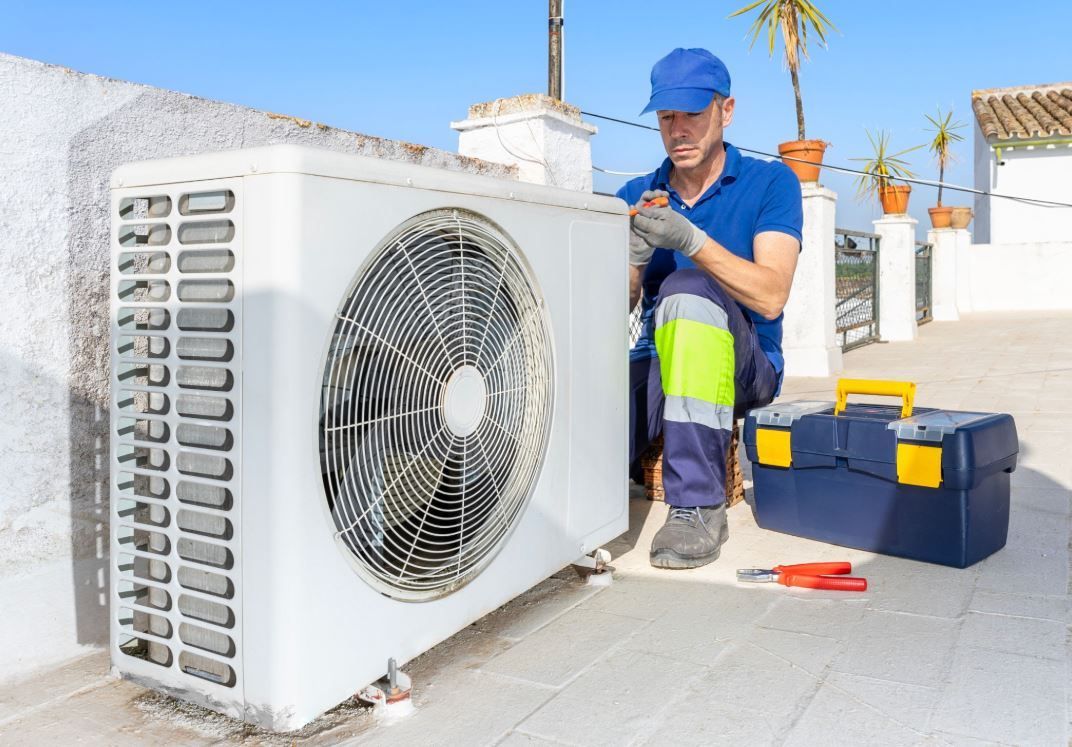
3.Equipment Removal and Line Preparation:Safe recovery of existing refrigerant.Technicians recover old refrigerants according to EPA regulations, remove outdated indoor air handlers and outdoor condensers, and flush or replace copper line sets.
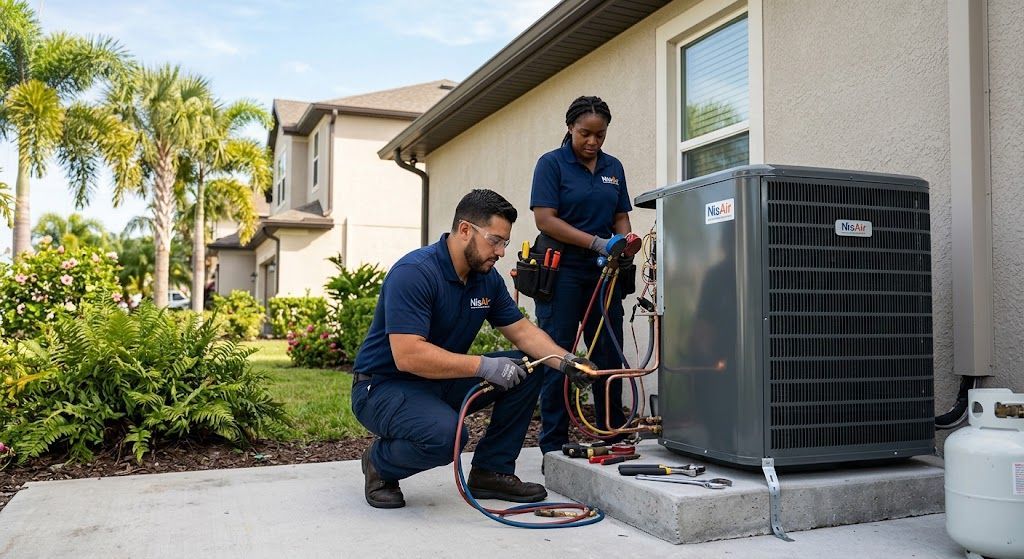
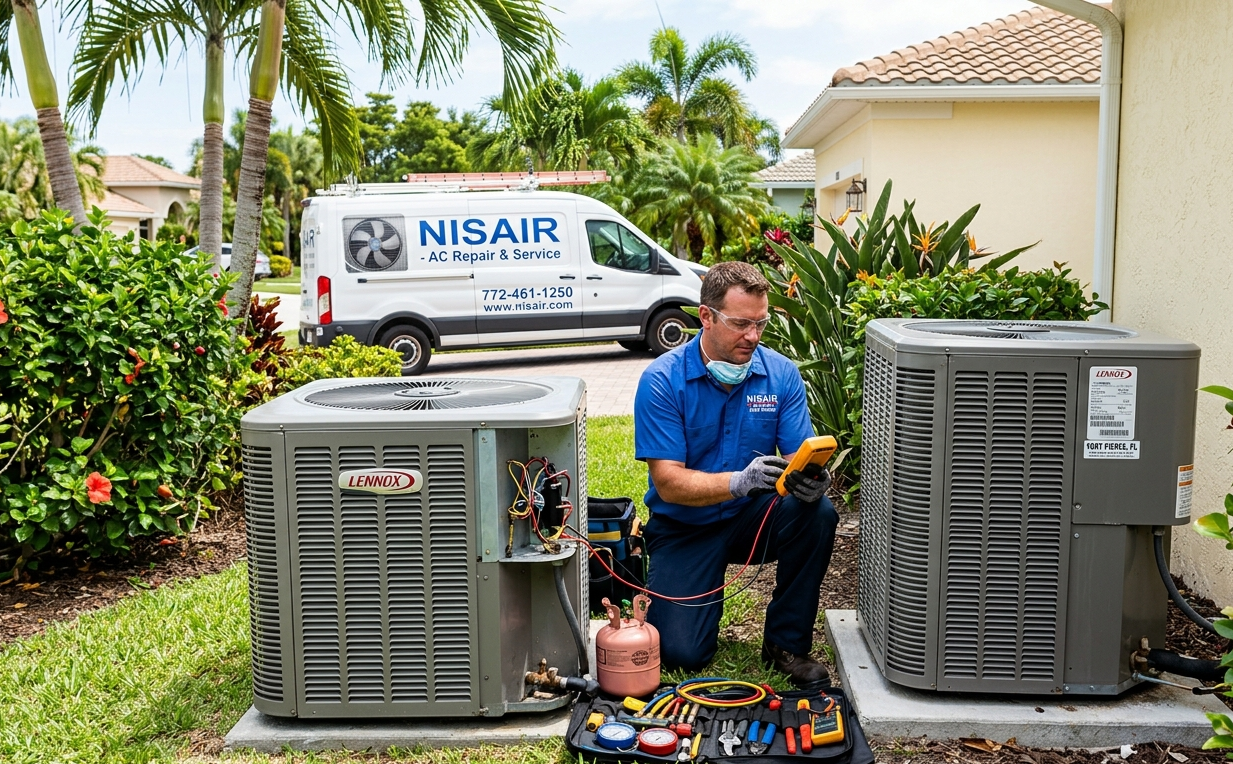
4.Unit Mounting and System Connections:Securing equipment against extreme weather.Installers level and anchor outdoor condenser pads using approved hurricane tie-downs. Indoors, air handlers are mounted with primary and secondary drain pans featuring safety float switches.
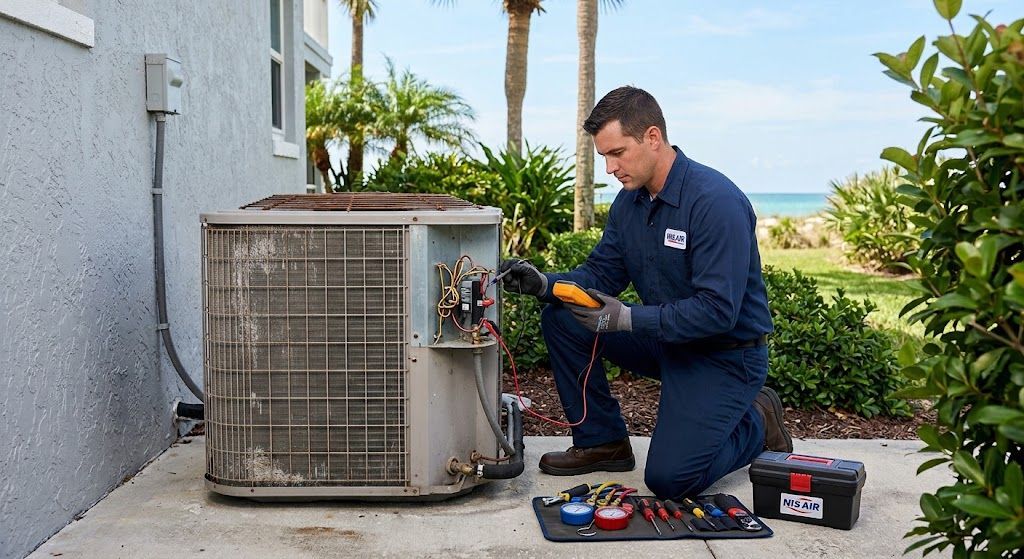
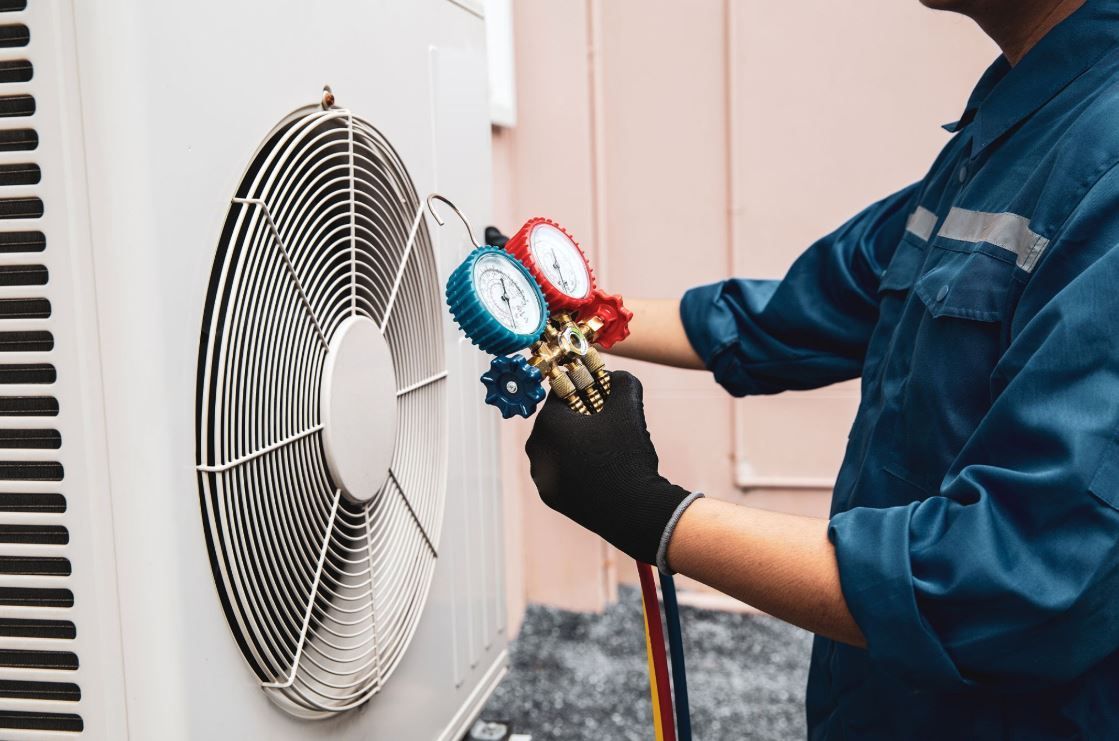
5.Vacuum Evacuation and Refrigerant Charging:Ensuring a clean and leak-free refrigerant system.The line set is evacuated down to a deep vacuum (below 500 microns) to purge moisture and non-condensable gases before establishing the correct refrigerant charge.
6.System Testing, Balancing, and Setup:Confirming optimal performance metrics.Technicians check temperature differentials across coils, verify static duct pressure, configure smart thermostats, and review system operation with the homeowner.
4. Condensate Drain Safety and Water Protection
Condensate management is a critical aspect of air conditioning performance in humid climates. On hot summer days, a central air conditioner can extract several gallons of water from household air every 24 hours. Improperly installed drain lines can cause significant water damage to ceilings, drywall, and flooring.
- Primary and Secondary Drain Lines: Indoor air handler setups require a primary condensate line as well as a dedicated secondary backup line.
- Safety Float Switches: Code-compliant installations include automatic shut-off float switches. If a drain line clogs with algae or debris, the switch shuts off power to prevent overflow.
- Cleanout Access Points: Installers should include accessible cleanout tees, making it easy for homeowners to flush drain lines periodically with warm water or vinegar.
5. Choosing a Qualified Contractor
Because local weather conditions place high demands on cooling equipment, installer expertise plays a major role in system longevity. Proper installation helps prevent frequent component failures and unnecessary energy costs.
Key factors when selecting an installer include:
- Active Florida Licensing and Insurance: Confirm state mechanical contractor licensing (such as CAC or CCC numbers) along with comprehensive liability coverage.
- Proper Municipal Permitting: Avoid contractors who frame building permits as optional. Unpermitted work can create issues during future property sales and may void manufacturer warranties.
- Factory Certifications: Major equipment manufacturers require specialized contractor training to back full factory warranty terms on compressors and coils.
6. Maintaining Performance After Setup
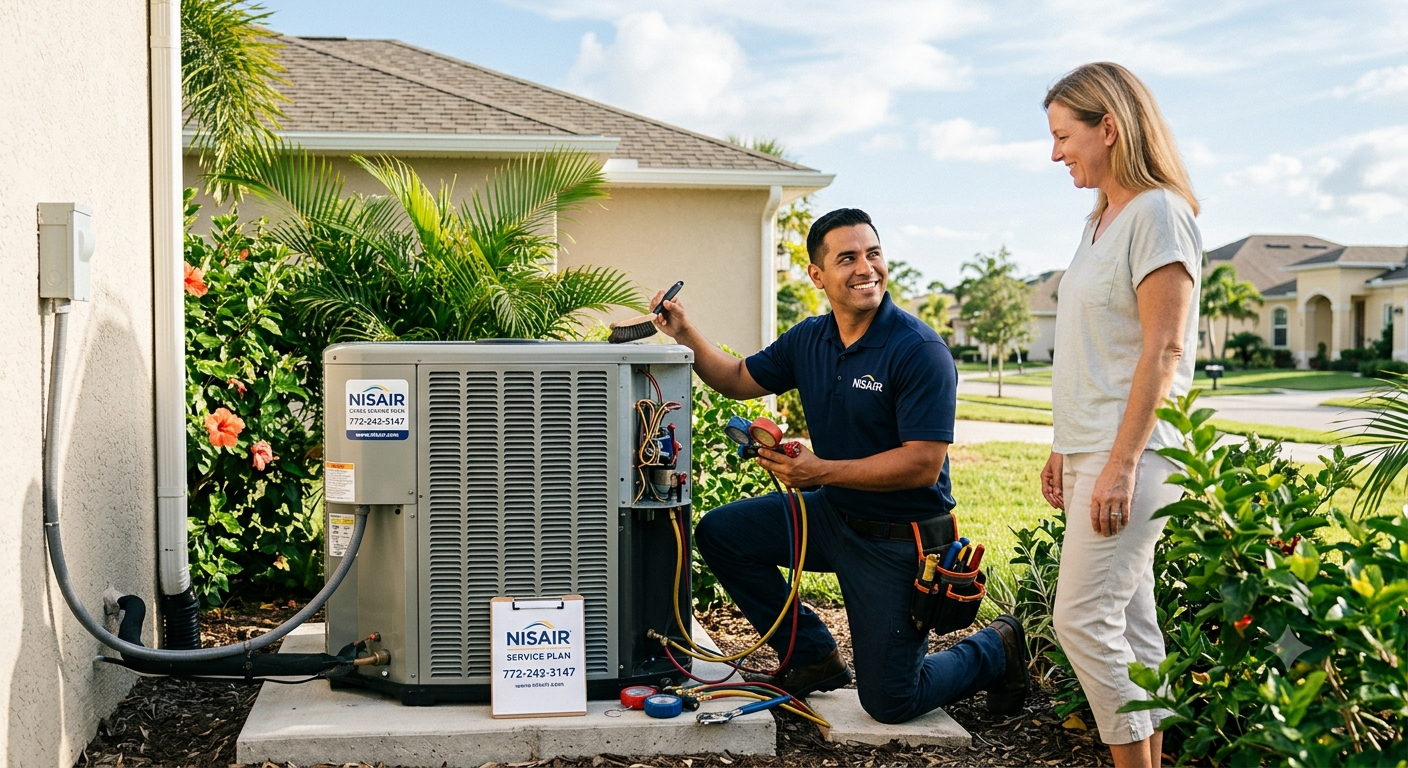
Once your new cooling equipment is online, routine care protects your investment. Replacing air filters every 30 to 60 days maintains clean airflow across evaporator coils. In addition, scheduling professional bi-annual tune-ups ensures electrical connections remain secure, drain lines stay clear, and refrigerant pressures stay balanced.
When planning climate upgrades for your home, work with regional specialists who understand local building codes and coastal weather conditions. For expert assistance, precise equipment sizing, and professional service across the area, contact the team at
NisAir Air Conditioning for your complete
HVAC installation needs. Working with experienced local technicians ensures your home stays cool, comfortable, and energy-efficient year-round.