Living in Fort Pierce, Florida, comes with undeniable perks—endless sunshine, ocean breezes, and a vibrant coastal lifestyle. However, it also comes with a unique set of climate challenges. The Treasure Coast is known for intense summer heat, unrelenting relative humidity, salty air, and sudden tropical storms. Under these harsh conditions, your home’s heating, ventilation, and air conditioning (HVAC) system is far more than a simple luxury; it is an essential line of defense for your family’s safety, indoor health, and daily comfort.
When temperatures soar into the nineties and humidity levels approach 90%, a malfunctioning cooling system can transform your residence into an unbearable furnace within hours. Navigating the world of local air conditioning repair, system maintenance, indoor air quality management, and energy-efficient replacements requires practical local knowledge. This guide explores everything you need to know about professional cooling and heating solutions in Fort Pierce, helping you maximize system lifespan, reduce monthly utility bills, and ensure uninterrupted indoor comfort.
The Unique Coastal Climate Challenges in Fort Pierce
To understand why specialized HVAC solutions are vital in St. Lucie County, you must first look at how the coastal environment impacts mechanical cooling systems.
High Humidity and Moisture Management
In Fort Pierce, air conditioning is only half of the cooling equation; moisture removal is the other. Excess humidity causes indoor air to feel significantly warmer than it actually is, encouraging occupants to set thermostats lower than necessary. More importantly, high humidity creates ideal conditions for mold, mildew, and dust mites inside air ducts and living spaces. A properly sized and configured system acts as a powerful dehumidifier, balancing moisture levels alongside ambient temperature.
Salt Air Corrosion
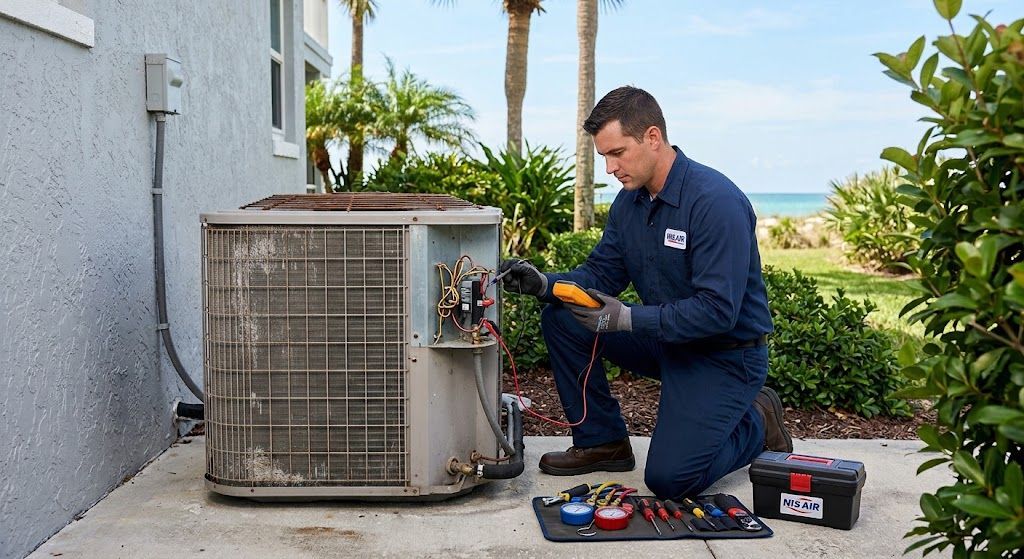
Proximity to the Atlantic Ocean exposes outdoor condensing units to airborne salt spray. Over time, salt accelerates the oxidation and corrosion of aluminum condenser fins, copper tubing, and electrical connections. Without protective marine-grade coatings or frequent professional flushing, outdoor coils degrade rapidly, leading to refrigerant leaks and premature system failure.
Extended Operational Hours
Unlike Northern states where heat pumps or central air conditioners run seasonally for three to four months, Fort Pierce cooling systems run hard for eight to ten months out of the year. This heavy operational load causes mechanical wear and tear at nearly double the national average rate, requiring rigorous preventative attention.
Essential HVAC Services Fort Pierce Homeowners Need
A comprehensive approach to home climate control covers every stage of an equipment lifecycle—from initial sizing to routine care and eventual replacement.
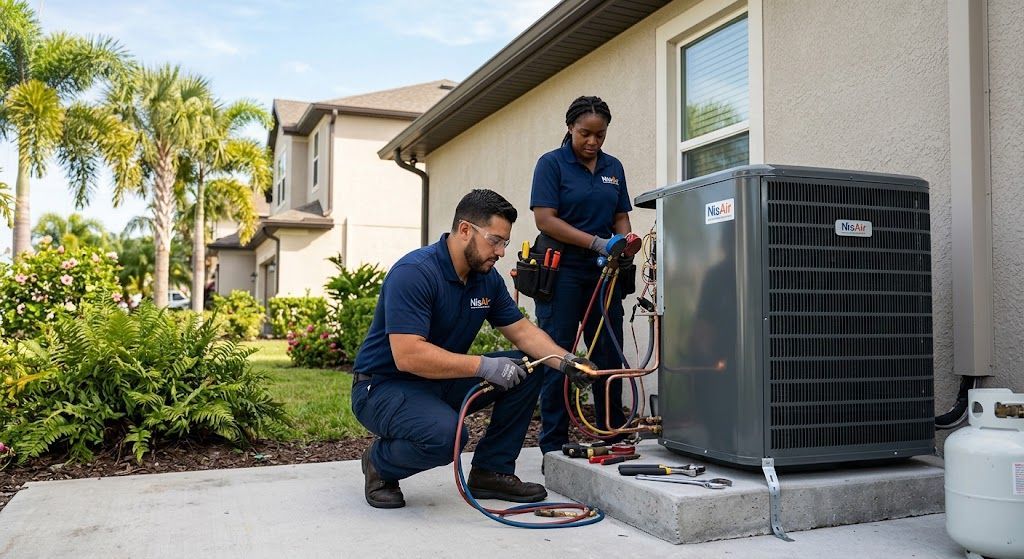
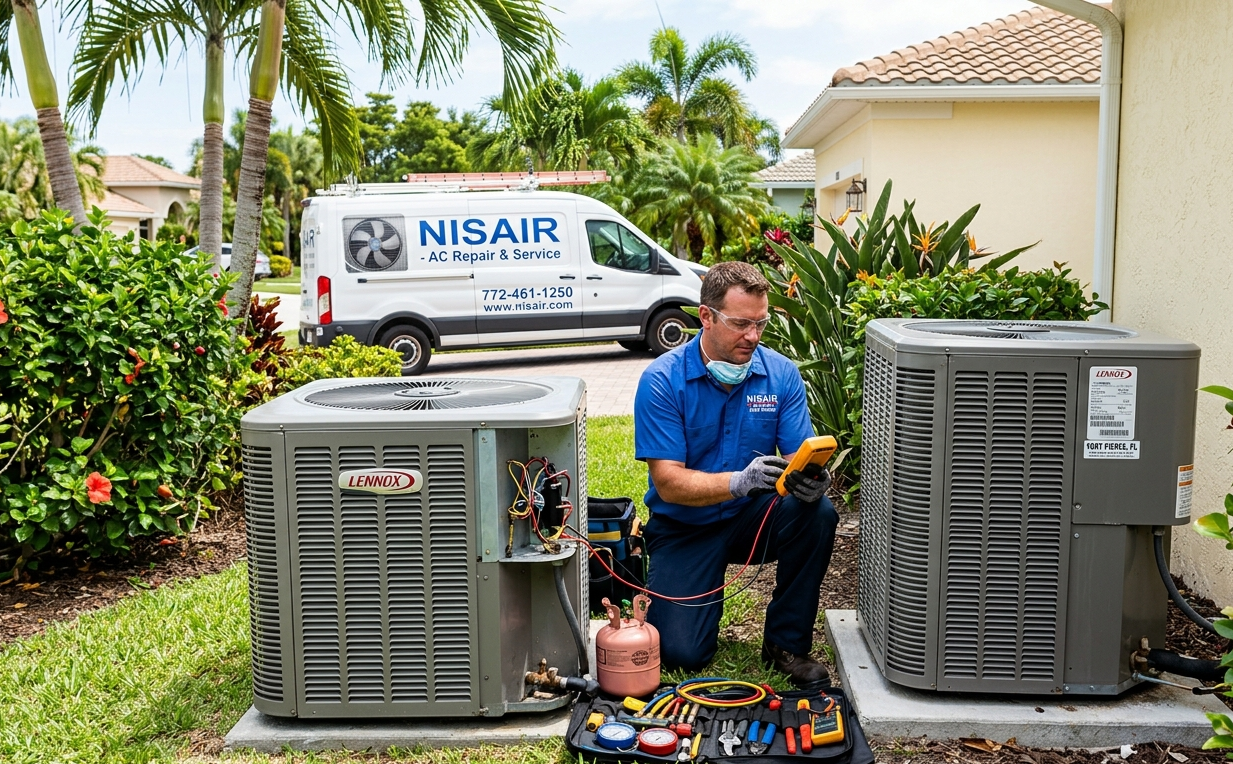
- Emergency AC Repair: Rapid diagnosis and fix of sudden mechanical or electrical failures. Available 24/7 to restore cooling during extreme heat spells.
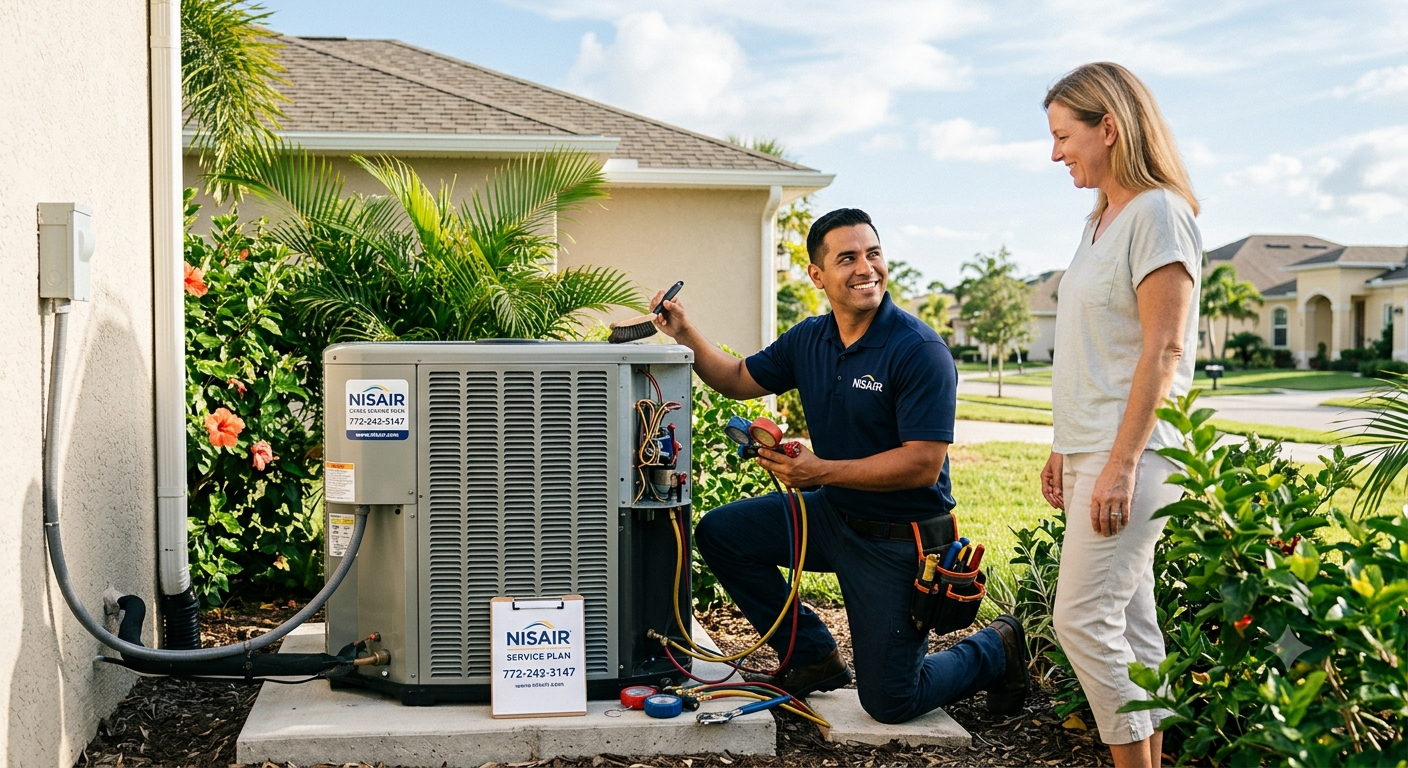
- Preventative Maintenance: Routine cleaning of coils, checking refrigerant levels, and testing electrics twice per year to prevent sudden breakdowns and extend system lifespan.
- Complete System Replacement: Installing modern, high-SEER2 central or mini-split units every 10 to 15 years to lower power bills and utilize updated technology.
- Indoor Air Quality Solutions: Installing UV purifiers, media filters, and whole-home dehumidifiers for continuous removal of mold spores, dust, and coastal allergens.
- Duct Inspection and Repair: Sealing leaks, cleaning accumulated debris, and fixing airflow every 3 to 5 years to eliminate hot spots and reduce operational strain.
Common Signs Your Cooling System Requires Immediate Repair
Ignoring small warning signs often leads to total mechanical breakdown during the hottest days of summer. Recognizing early red flags saves time, reduces emergency costs, and prevents cascading component failures.
Weak or Warm Airflow
If air coming through your vents feels tepid or lacks adequate velocity, your system may be struggling with clogged air filters, a failing blower motor, or a restricted evaporator coil. Decreased airflow forces the compressor to work harder, dramatically increasing electricity consumption.
Frequent Short-Cycling
Does your air conditioner turn on, run for three minutes, shut off, and immediately turn back on? This phenomenon, known as short-cycling, strains electrical components and rapidly wears down the compressor motor. Common causes include oversized units, faulty thermostat sensors, or low refrigerant levels.
Unfamiliar Noises and Odors
- Grinding or Metal-on-Metal Sounds: Indicates worn motor bearings requiring immediate replacement.
- Squealing or Screeching: Points to slipping blower belts or excessive pressure inside the compressor.
- Musty "Dirty Sock" Smell: Signals bacterial growth or mold accumulation on the dark, damp evaporator coil.
- Burning Smell: Suggests overheating wiring, melted insulation, or electrical shorts inside the control box.
Unexpected Utility Bill Spikes
If your electricity consumption jumps without a corresponding shift in weather or household usage, your cooling system is losing operational efficiency. A failing capacitor, dirty heat exchangers, or leaking ductwork can force the system to consume up to 40% more power to achieve standard cooling targets.
The Critical Importance of Preventative Maintenance
The single most effective strategy to avoid unexpected breakdowns is establishing a schedule of bi-annual maintenance tuned to the Florida climate.
Spring Maintenance (Pre-Summer Checklist)
- Deep clean condenser and evaporator coils to remove dirt and salt residue.
- Inspect refrigerant pressures and repair any micro-leaks.
- Flush condensate drain lines with algaecide treatments to prevent clogs.
- Calibrate thermostat sensors and measure airflow cubic feet per minute (CFM).
Fall Maintenance (Pre-Winter Checklist)
- Inspect heat pump reversing valves and electric heat strips for reliable operation.
- Tighten electrical connections and test capacitor run voltage.
- Lubricate fan motor bearings and check belt tension.
- Test indoor air quality filters and inspect purification lamps.
Regular tune-ups deliver clear, measurable benefits. They preserve manufacturer warranties, which require documented annual service to honor parts replacement terms. They lower monthly electric bills by keeping coils clean and components calibrated for optimal heat exchange. Furthermore, bi-annual care prevents water damage. In humid coastal regions, a clogged condensate drain line can overflow within hours, damaging drywall, ceilings, and flooring. Professional flushing eliminates this costly risk.
Choosing the Right High-Efficiency System for Replacement
When an air conditioner reaches 12 to 15 years of age, replacing it with a modern, high-efficiency system is typically more cost-effective than making continuous repairs.
Understanding SEER2 Ratings
In recent years, the U.S. Department of Energy updated efficiency metrics to
SEER2 (Seasonal Energy Efficiency Ratio 2). This standard tests equipment under realistic duct pressure conditions. In Florida’s warm climate region, minimum efficiency standards require at least 14.3 SEER2 for residential split systems. Upgrading from an older 10 SEER system to a modern 16+ SEER2 unit can reduce cooling energy consumption by up to 30–40%.
Inverter-Driven Variable-Speed Compressors
Traditional single-stage systems operate at 100% capacity whenever turned on, cycling on and off repeatedly. Modern variable-speed inverter systems adjust operational capacity in precise increments (from 25% to 100%). By running continuously at lower speeds, inverter units maintain laser-consistent indoor temperatures, extract maximum humidity, and run almost silently.
Enhancing Indoor Air Quality in Coastal Florida
Because modern homes are sealed tightly to maximize energy efficiency, indoor pollutants become trapped inside. Dust, pet dander, volatile organic compounds (VOCs), pollen, and mold spores circulate continuously through living spaces.
To combat coastal humidity issues, consider a multi-layered indoor air quality approach:
- Whole-Home Dehumidifiers: These units pull excess moisture out of the air independently of the cooling cycle, allowing you to stay comfortable at higher thermostat settings.
- Germicidal UV Light Air Purifiers: Installed inside the air handler, ultraviolet lights neutralize bacteria, viruses, and mold spores before they circulate into your rooms.
- High-MERV Media Filters: Upgrading from basic fiberglass filters to MERV 11 or MERV 13 pleated media filters captures microscopic particles without choking air supply.
Dependable Local Comfort Solutions
When selecting a local service partner to repair, maintain, or upgrade your home's thermal systems, prioritize verified local experience, licensed and insured technicians, transparent pricing, and fast emergency response times. Protecting your home against coastal humidity requires a team that understands local building codes, hurricane strapping rules, and salt-air mitigation strategies. For comprehensive home heating, cooling, and air quality solutions, turn to trusted local experts for reliable
HVAC Services Fort Pierce to keep your property cool, healthy, and energy-efficient year-round.
Investing in expert care ensures your home remains a tranquil, climate-controlled sanctuary—no matter how hot or humid the Treasure Coast weather becomes outside.