Expert AC Repair Fort Pierce Guide to Year-Round Comfort
Living on Florida’s Treasure Coast offers year-round sunshine, vibrant coastal living, and warm ocean breezes. However, the exact climate conditions that make Fort Pierce so attractive also put an extraordinary amount of strain on residential and commercial cooling systems. When July humidity peaks or an August heatwave strikes, a sudden breakdown of your air conditioner can turn a comfortable home into an unbearable furnace within hours.
Understanding how your cooling system functions, recognizing the early signs of failure, and knowing when to call a professional for emergency service can save you thousands of dollars in premature replacement costs and skyrocketing utility bills. This comprehensive guide covers everything you need to know about air conditioning maintenance, common system failure points, coastal HVAC challenges, and selecting the right local technicians to keep your home cool year-round.
The Coastal Florida Climate and Your HVAC System
Air conditioning units in South Florida work significantly harder than systems installed in almost any other region of the United States. While systems in northern states might run for three to four months during the summer, a Fort Pierce cooling unit often operates for nine to ten months consecutively, sometimes running year-round.
This relentless operation introduces severe mechanical stress that accelerates wear and tear on internal components. Several environmental factors unique to coastal St. Lucie County directly impact performance:
- Extreme Ambient Humidity: Air conditioners do double duty; they lower the indoor air temperature while simultaneously pulling moisture out of the air. High outdoor humidity forces compressor motors and blower fans to run longer cycles to reach desired indoor humidity levels (ideally between 45% and 55%).
- Salty Ocean Air: Salt air corrosion is a major issue for coastal properties. Salt spray carried inland by ocean breezes deposits salt crust on outdoor condenser coils. This residue corrodes delicate aluminum fins, weakens copper lines, and creates micro-leaks in refrigerant lines.
- Frequent Summer Thunderstorms: Daily afternoon rainstorms introduce sudden power surges, rapid voltage fluctuations, and lightning strikes. Lightning and power flickers frequently blow capacitors, burn out contactor switches, or damage digital thermostat control boards.
- Biological Growth: Florida’s combination of heat, moisture, and darkness inside dark air handler compartments creates an ideal breeding ground for algae, mold, and bacteria. Without active prevention, drain lines easily clog and overflow.
7 Warning Signs You Need Urgent Air Conditioning Repair
An air conditioner rarely fails without providing warning signs first. Catching small mechanical irregularities early prevents minor component failures from cascading into complete compressor burnout. Watch out for these seven warning signs:
1. Warm or Room-Temperature Air Flowing From Vents
If your unit is running continuously but blowing warm or lukewarm air from supply registers, the issue usually stems from a failed compressor, a low refrigerant charge caused by a coil leak, a blocked condenser coil, or a faulty outdoor run capacitor.
2. Frequent Short-Cycling
Short-cycling occurs when your AC turns on, runs for two to three minutes, shuts off abruptly, and then restarts a few moments later. This constant cycling severely stresses the compressor motor and consumes massive amounts of electricity. Common culprits include oversized units, clogged air filters, malfunctioning thermostat sensors, or low refrigerant levels triggering low-pressure safety switches.
3. Strange Noises During Operation
While a faint hum or air-swooshing noise is completely normal, sharp or unfamiliar mechanical sounds indicate immediate mechanical trouble:
- Grinding or Screeching: Worn-out motor bearings in the indoor blower wheel or outdoor fan motor.
- Squealing: Slip or wear on older fan belts or failing motor bearings.
- Banging or Clanking: Loose or broken connecting rods inside the compressor assembly, or an unbalanced blower wheel.
- Clicking at Startup: A failing electrical contactor relay or a struggling capacitor attempting to start the motor.
- Hissing or Bubbling: Refrigerant escaping through pressurized micro-leaks in the evaporator or condenser coils.
4. High Indoor Humidity Levels
If your home feels sticky, clammy, or muggy even when the indoor thermostat reads 72°F, your system is failing to dehumidify effectively. This often indicates a dirty evaporator coil, incorrect fan speed settings, or a system that has lost its cooling capacity due to mechanical age.
5. Water Pooling Around the Air Handler or Condenser
Water accumulation around your indoor unit is a clear sign of a blocked condensate drain line, a cracked drain pan, or a frozen evaporator coil that is thawing rapidly. Water leaks can quickly cause extensive ceiling damage, drywall rot, and hazardous mold growth if left unaddressed.
6. Unexplained Spikes in Utility Bills
If your cooling habits have not changed but your electric bill jumps significantly month-over-month, your unit is losing operational efficiency. A failing capacitor, dirty coils, or a struggling compressor must work twice as hard and draw far more electrical current to produce the same amount of cooling.
7. Persistent Musty or Burning Odors
A sharp, pungent burning smell usually signals electrical wire insulation melting or a motor winding burning out. Conversely, a damp, mildew-like odor (often referred to as "dirty sock syndrome") points to heavy mold or bacterial growth on the indoor evaporator coils and inside the main ductwork trunk.
Common AC Repair Issues and How Professionals Fix Them
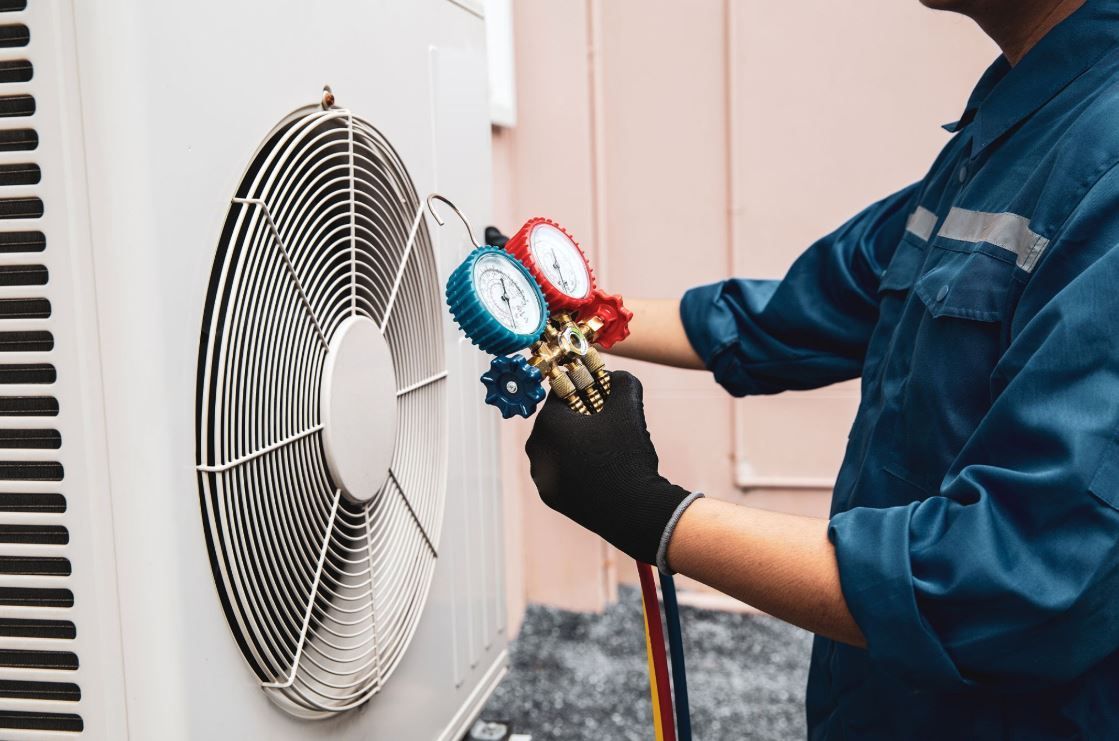
Diagnosing modern heating, ventilation, and air conditioning equipment requires specialized tools, digital manifold gauges, diagnostic multimeters, and environmental certifications. Below are the most frequent repairs performed in Fort Pierce residences:
+-----------------------------------------------------------------------+
| COMMON AC FAILURES & SOLUTIONS |
+-----------------------------------------------------------------------+
| ISSUE | PRIMARY CAUSE | PROFESSIONAL FIX |
+--------------------------+-----------------------+--------------------+
| Blown Capacitors | Voltage spikes/Heat | Replace component |
+--------------------------+-----------------------+--------------------+
| Clogged Drain Lines | Algae/Dust buildup | Flush/Vacuum/Treat|
+--------------------------+-----------------------+--------------------+
| Refrigerant Leaks | Formication/Corros. | Seal & Recharge |
+--------------------------+-----------------------+--------------------+
| Frozen Evaporator Coils | Restricted airflow | Thaw/Replace filter|
+--------------------------+-----------------------+--------------------+
Capacitor Replacement
The dual-run capacitor serves as the starter battery for your AC system, providing the high-voltage boost required to start the compressor and outdoor fan motor. Florida’s intense heat degrades capacitor dielectric fluid rapidly. Replacing a bulging or weak capacitor takes under an hour, but running a system with a failing capacitor will quickly destroy the expensive compressor motor.
Clearing Clogged Condensate Drain Lines
As warm air passes across the ice-cold evaporator coil, humidity condenses into liquid water, dripping into a collector pan and flowing outside through a PVC drain line. Dust, dirt, and microbial spores mix in this line, forming thick gelatinous clogs. Technicians clear these lines using nitrogen flushes or wet/dry vacuums, install cleanout tees, and add float safety switches that automatically shut off the system before water overflows into your home.
Refrigerant Leak Repair and Recharge
Air conditioners operate on a closed-loop sealed system; they do not "use up" or burn refrigerant over time. If refrigerant levels are low, there is a physical leak. Qualified technicians use electronic leak detectors or UV fluorescent dyes to pinpoint precise leak locations in aluminum or copper tubing, repair or replace the damaged coil segment, evacuate moisture with a vacuum pump, and recharge the system with the exact factory-specified weight of refrigerant (R-410A or newer low-GWP refrigerants).
Unfreezing and Repairing Evaporator Coils
When air flow across the indoor coil is restricted—due to a filthy air filter, blocked return vents, or a failing blower motor—the refrigerant inside the coil cannot absorb heat. The coil temperature drops below freezing (32°F), causing ambient moisture to freeze into solid ice on the fins. This starves the unit of air completely. Resolving this requires completely thawing the coil, restoring proper airflow, and evaluating system pressures.
Preventive Maintenance: Protecting Your Investment
Emergency repairs are stressful and disruptive, but routine preventative maintenance prevents up to 80% of unexpected breakdowns. Enrolling in a structured maintenance program provides significant long-term returns on investment through reduced energy consumption and extended equipment lifespan.
The Essential Homeowner Checklist
While major mechanical work requires licensed professionals, homeowners should perform simple maintenance tasks monthly:
- Replace Air Filters Every 30 to 60 Days: High-dust environments, pets, and frequent system operation clog air filters fast. Clean filters protect the indoor blower motor and keep evaporator coils free of insulating dust blankets.
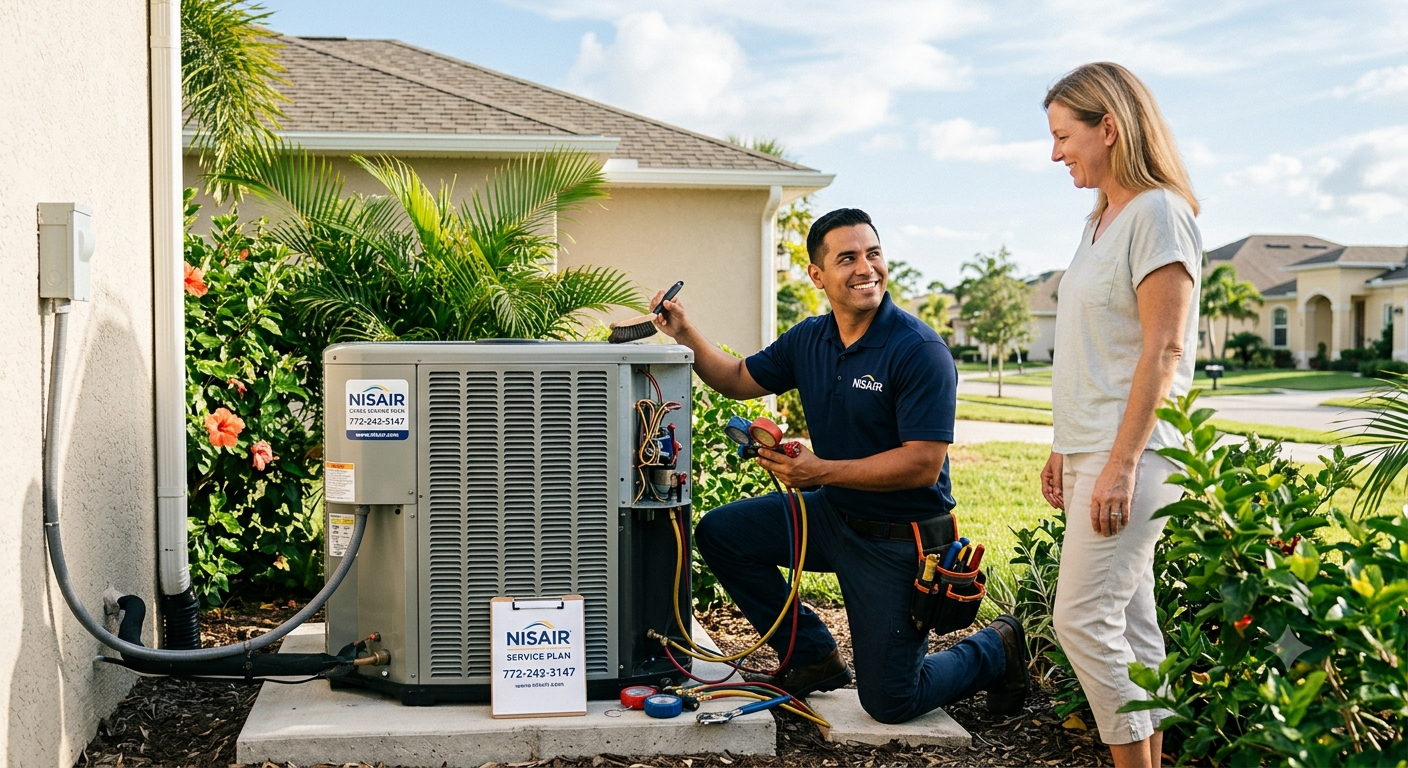
- Keep Outdoor Units Clear: Trim back surrounding bushes, weeds, and palm fronds at least two feet away from the outdoor condenser cabinet to ensure unrestricted airflow.
- Pour Vinegar Down the Drain Line: Pouring a cup of plain white distilled vinegar down the primary condensate line cleanout access monthly helps dissolve early algae growth.
- Rinse Condenser Coils Gently: Carefully rinse salt buildup and dirt off the outdoor unit using a garden hose equipped with a gentle spray nozzle (never use high-pressure power washers, which bend fragile aluminum fins).
What Professional Tune-Ups Include
A comprehensive bi-annual professional tune-up goes far beyond basic filter changes. Certified technicians perform precise checks, including:
- Testing electrical wire connections, measuring voltage, and checking motor amp draws against manufacturer standards.
- Cleaning indoor evaporator coils and treating drain pans with anti-microbial tabs.
- Measuring temperature drop (delta T) across the supply and return air registers to verify cooling efficiency.
- Inspecting blower motor assemblies, balancing wheels, and lubricating moving parts where applicable.
- Calibrating digital thermostats and testing safety cutoff switches to protect against system flooding or overheating.
Modern HVAC Solutions: Energy Efficiency and Air Quality
HVAC technology has advanced rapidly over the past decade. If your system is over 10 to 12 years old, upgrading to modern equipment can lower monthly electricity bills by 20% to 40% while significantly improving home comfort.
Inverter-Driven Variable-Speed Compressors
Traditional air conditioners operate like a basic light switch: they are either running at 100% capacity or completely turned off. Variable-speed inverter systems work like a dimmer switch, adjusting output dynamically in tiny increments anywhere from 25% to 100% capacity. This allows the unit to run continuously at low, ultra-quiet speeds, maintaining precise indoor temperatures while consuming a fraction of the electricity.
Whole-Home Dehumidification
In coastal regions, indoor air humidity can remain high even when the temperature is comfortable. Dedicated whole-home dehumidifiers integrate directly into your existing duct network. They extract dozens of pints of moisture daily without over-cooling your living space, making your home feel noticeably cooler at higher thermostat setpoints.
Advanced Indoor Air Quality (IAQ) Systems
Indoor air can contain higher concentrations of pollutants than outdoor air due to sealed building envelopes. To maintain clean air, modern systems can be enhanced with:
- MERV 11-16 High-Efficiency Media Filters: Captures microscopic dust, pollen, pet dander, and mold spores.
- UV-C Germicidal Lights: Installed inside the air handler near the damp evaporator coil to neutralize mold spores, bacteria, and viruses before they circulate through your home.
- Whole-House Air Purifiers: Devices like the REME HALO® produce ionized hydrogen peroxide molecules that sweep through living spaces, neutralizing odors, smoke, airborne bacteria, and surface contaminants.
Choosing the Right HVAC Contractor in Fort Pierce
When your cooling system breaks down, selecting a qualified, trustworthy local contractor is critical. A poor installation or improper repair can permanently degrade system performance and void manufacturer warranties.
Look for these essential qualifications when selecting an HVAC contractor:
- Licensing and Insurance: Verify that the company holds valid State of Florida Class A or Class B Air Conditioning Contractor licenses and carries comprehensive general liability and workers' compensation coverage.
- Local History and Reputation: Choose an established company with deep roots in St. Lucie County. A team with decades of local experience understands the specific challenges posed by coastal climates.
- NATE-Certified Technicians: North American Technician Excellence (NATE) certification guarantees that the technicians servicing your equipment have passed rigorous, industry-recognized real-world exams.
- 24/7 Emergency Availability: AC emergencies rarely happen during convenient business hours. Dependable contractors offer round-the-clock emergency dispatch.
- Transparent Pricing: Reputable service providers offer upfront estimates before work begins, eliminating surprise fees on final invoices.
For homeowners and business owners seeking fast, long-lasting relief from unexpected breakdowns, scheduling prompt ac repair fort pierce services with proven local professionals ensures your cooling system is restored to peak efficiency quickly, safely, and affordably.
Frequently Asked Questions
How long should an air conditioning system last in Fort Pierce?
While AC units in milder climates often last 15 to 20 years, systems in coastal Florida generally have an average lifespan of 10 to 12 years due to high operational hours and salt-air exposure. Regular maintenance can help push your equipment toward the upper end of that range.
What size AC unit does my home require?
AC sizing depends on far more than square footage alone. A professional contractor calculates heat gain using a Manual J load calculation, taking into account ceiling heights, window directions, insulation values, duct efficiency, and building orientation. Installing an oversized unit causes short-cycling and high humidity, while an undersized unit will run continuously without ever keeping the home cool.
Is it better to repair or replace a broken air conditioner?
Consider the "5,000 Rule": multiply the estimated repair cost by the age of the system in years. If the total exceeds $5,000, or if the unit uses outdated R-22 refrigerant, replacement is generally the more cost-effective choice. Otherwise, repairing the unit is usually the right path forward.
What temperature should I set my thermostat in the summer?
The U.S. Department of Energy recommends setting your thermostat to 78°F when you are home and awake for an optimal balance of comfort and energy savings. Raising the temperature to 82°F–85°F when away from home helps prevent unnecessary power usage while maintaining humidity control.
Keep Your Home Cool and Comfortable Year-Round
Your air conditioner is one of the most critical systems in your Florida home. Understanding the unique demands placed on your equipment by the coastal climate, sticking to a regular filter schedule, addressing unusual sounds or poor cooling early, and partnering with experienced local technicians will keep your system running efficiently year after year. Stay proactive with maintenance, act quickly at the first sign of trouble, and enjoy reliable indoor comfort no matter how high the outdoor temperature climbs.
Recent Posts