How to Know If Your Heating System Is Near the End

NisAir Air Conditioning • October 24, 2025

How to Know If Your Heating System Is Near the End

In general, most furnaces and heat pumps will last 15 to 20 years. Some systems may hang on a little while longer if they’re well taken care of, while others may call it quits much sooner if they’ve been neglected or overburdened.


Age alone isn’t always the whole story, however. You might have a 10-year-old system that has been maintained regularly, and it will likely run better than 5-year-old HVAC equipment that has been ignored.

Signs Your System Is Getting Older

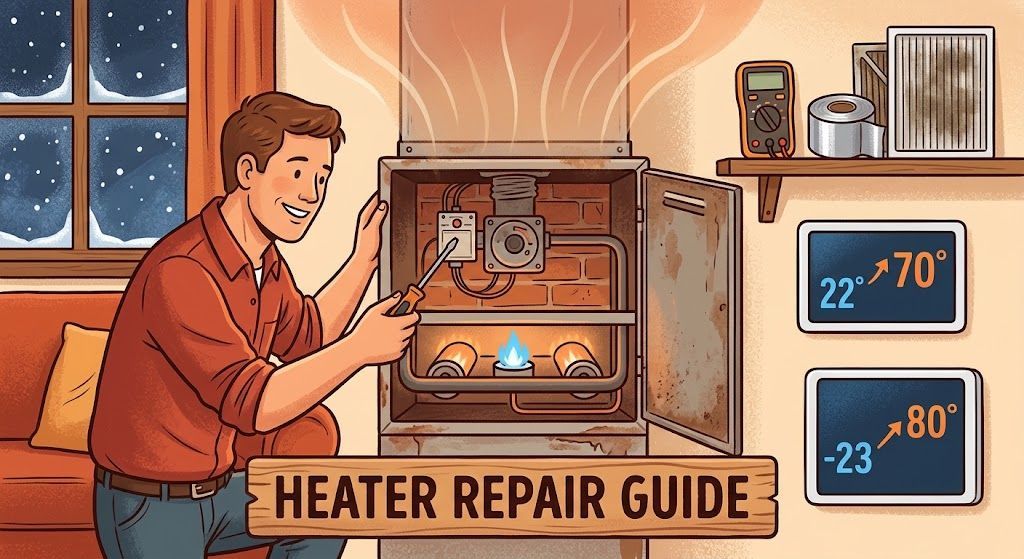
Sometimes your system attempts to warn you it’s nearing the end of its life. The case may be that your house just doesn’t seem as warm, even though you’ve turned up the thermostat. Or maybe the unit spends more time running than it once did, overworking to hold that temperature. Higher heating bills are another warning sign. If your monthly heating bills continue to rise, even though your usage patterns have not changed, your system may be losing its efficiency.


Strange sounds, such as banging, screeching, or rattling, can also be a tip-off. And if you’re calling your HVAC company for repairs more frequently than in the past, that’s a strong signal that it may be time to begin thinking about replacing your system.

How to Make Your System Last Longer

Many experts will tell you that taking care of your heating system will make it last longer. One good way to provide your system with the care that it needs is to schedule at least one technician visit per year to thoroughly examine it and provide maintenance. They’ll catch any problems before they turn into costly repairs that will pulverize your wallet. Regularly changing filters can also be extremely helpful. Block airflow, and your system works harder and wears out quicker.

When Replacement Is Better Than Repair

It’s easy to keep repairing your heating system, especially if a repair feels less expensive than buying a new one. But eventually, repairs become impractical. If your system is 15 years or older and has frequent breakdowns, investing in a replacement might be a better move for your wallet overall. Newer systems are generally more energy efficient, so your heating bills may be lower after installing new equipment.


There’s also the question of comfort. A new system may more effectively keep your home warm. You won’t feel cold spots, and you won’t even hear the unit roar to life each and every time it kicks on, either.


If your heating system is getting old, you need to start preparing now. By being proactive, you can take your time browsing, comparing options, and making the best choice without any rush. If you are in the market for a new system and want to go over your options for your Fort Pierce, FL home, contact NisAir to learn more about our heating replacement and installation services as well as our heating repair

Recent Posts

By Corey Creekmore April 9, 2026
Looking for reliable AC repair in Stuart, FL? NIS Air offers expert HVAC installation, maintenance, and emergency repairs to keep your Florida home comfortable.
By Corey Creekmore April 4, 2026
Looking for expert AC repair in Port St. Lucie, FL? NisAir offers reliable HVAC maintenance, emergency repairs, and high-efficiency installs. Schedule today!
By Corey Creekmore March 21, 2026
Is your AC drain line a ticking time bomb? Learn how a simple $0.50 pipe can cause $10,000 in water damage and how to fix it fast. Read the Nisair guide now.
By Nis Air March 20, 2026
Cooling mistakes in Jensen Beach, FL like neglecting filters, ignoring maintenance, and improper thermostat settings waste energy and shorten AC system lifespan.
By Corey Creekmore March 20, 2026
The Fundamental Mistake: Temperature ≠ Comfort We are conditioned to think of comfort linearly. 75°F is warm; 70°F is cool. If you are warm, make the number lower. This logic works perfectly in Arizona, where "Hot & Dry" dominates. In South Florida, however, your air conditioner has two entirely separate jobs, but it can only perform one of them at a time with maximum efficiency. Job 1 (Sensible Cooling): Lowers the actual air temperature (what your thermostat measures). Job 2 (Latent Cooling): Removes the humidity from the air. When it’s a standard Florida afternoon, your home isn’t just hot. It’s "heavy." The air is thick with moisture. A high-efficiency A/C system must prioritize removing that moisture before it can efficiently lower the temperature. The Science of Clamminess Why does humidity make us feel hot even when the temperature is low? It’s all about the dew point. When the humidity in your home is high (above 60%), the moisture in the air has nowhere to go. Because of this saturation, the natural mechanism your body uses to cool down—evaporation from your skin (sweat)—cannot function. You are stuck with a film of sweat that cannot evaporate. This creates that distinct "clammy" or "sticky" feeling. You feel hot not because of the air temperature, but because your body cannot reject its own heat. The Problem: Your A/C is Doing "The Florida Hustle" When you set your thermostat to 70°F on a humid day, you are telling your A/C system to work against its own physics. To reach that extremely low number, the compressor runs at maximum capacity. The system has to work so hard to make the air that cold that it has to run in short, intense bursts (especially with older single-speed systems). This is called Short-Cycling . This is the core of the problem. Short-Cycling: The Comfort Assassin Here is what happens inside your system during a short-cycle: The thermostat demands 70°F. The A/C blasts the air down from 76°F to 72°F quickly. The air coming out of the vents is freezing (maybe 55°F). But the entire run time was only 7 minutes. The problem? It takes about 10–15 minutes of continuous run time for an A/C system’s coils to get cold enough to properly remove moisture (Job 2). During that 7-minute burst, your A/C reached the target temperature (Job 1) and shut off. But it removed almost ZERO humidity. The result is "The Meat Locker" effect shown on our matrix: Your air is cold, but the humidity is still 68%. You are clammy, uncomfortable, and you are wasting hundreds of dollars a month running your system in its least efficient state. The Solution: Shift Your Thinking (and Your Thermostat) To fix a "Hot & Dry" home in Arizona, you lower the thermostat. To fix a "Hot & Wet" home in Florida, you might actually need to raise the temperature. The 74-Degree Oasis This is the counter-intuitive "life hack" that South Floridians need to embrace. If you can lower your humidity from 70% down to 45%, you can set your thermostat significantly higher and still feel cooler and more comfortable than you did at 70°F. A dry home set at 75°F will feel cooler and more pleasant to your body than a clammy, humid home set at 71°F . How to Fix Your Sticky Home: A 3-Step Action Plan You do not necessarily need a new A/C to solve this problem. Here is how to fight the Humidity Ghost: 1. The "AUTO" Rule (The #1 Mistake Homeowners Make) Check your thermostat right now. Is the Fan setting on ON or AUTO ? If it is on "ON," change it to "AUTO" immediately. This single action is responsible for 80% of humidity issues we diagnose. When set to "ON": The fan runs constantly, even when the A/C compressor is off. What happens: The A/C runs its cycle, removing humidity from the air and trapping it on the cold evaporator coils. The cycle ends, and the compressor shuts off. BUT... the fan keeps blowing. The Problem: That constant fan air blows directly across the newly damp coils. It re-evaporates all the moisture you just painstakingly collected and blows it right back into your living room. You are effectively using your A/C as a humidifier. 2. The Annual "Health Check" (Maintenance is Key) A dirty or neglected system cannot handle Florida's humidity demands. A Dirty Air Filter: Restricts airflow. This makes the coils get too cold, potentially freezing them, which prevents them from absorbing moisture properly. A Clogged Drain Line: This is critical. The A/C collects moisture, and it needs to flow out of your house. A clogged line keeps that moisture trapped inside the air handler, where it re-evaporates. Low Refrigerant: A system with low refrigerant (a leak) operates at a higher internal temperature. It cannot make the coils cold enough to achieve the dew point required for effective dehumidification. 3. Technology Upgrades for True "Oasis" Comfort If your basic system isn't cutting it, you may need a technical assist. Whole-Home Dehumidifier: This is the gold standard for Florida comfort. It connects to your existing ductwork and removes moisture independently of your A/C system. This allows your A/C to focus only on Job 1 (Temperature) while the dehumidifier handles Job 2 (Humidity). You get perfect comfort while setting your thermostat higher (saving money). Variable-Speed A/C Systems: Unlike older systems that are either 100% "ON" or "OFF," variable-speed systems can run at lower speeds (e.g., 40% capacity) for much longer periods. They run the "Florida Comfort Cycle" perfectly: running long enough to remove all humidity, creating a perfectly balanced home with lower energy use. Conclusion: Regain Control of Your Comfort South Florida life is defined by humidity. Your air conditioner shouldn't just fight that humidity—it should master it. Don't spend another summer in "The Meat Locker." Stop treating the symptoms (Temperature) and start treating the cause (Humidity). By following these steps and shifting your focus from the temperature reading to your comfort level, you can create a dry, healthy, and cool "Oasis" in your own home. At NisAir, we are specialists in coastal comfort. If your home still feels sticky, trust our Treasure Coast experts to diagnose your humidity issue and provide the solution that’s right for your home, your health, and your budget. The 70-Degree Sweat: Why Your Florida Home Feels Hot Even When the A/C is Blasting
By Corey Creekmore March 13, 2026
Is your South Florida energy bill skyrocketing? Discover 5 hidden reasons your AC is overworking and how to save money from Vero Beach to West Palm Beach.
By Corey Creekmore March 7, 2026
Learn how to protect your AC in just 2 minutes before a hurricane hits. This essential HVAC guide prevents expensive damage and total AC system failure.
heater repair
By Corey Creekmore February 26, 2026
Don't let minor heat pump issues become major problems! Learn why quick repairs are crucial for efficiency, comfort, and avoiding costly system damage today.
By Nis Air February 18, 2026
Air conditioner replacement in Vero Beach, FL involves load calculation, system selection, professional installation, and testing to ensure optimal cooling performance.
heater repair
By Corey Creekmore February 18, 2026
Is your heater on the fritz? Discover why your heating system stopped working, from clogged filters to pilot light issues, and learn when to call an HVAC pro.
Show More